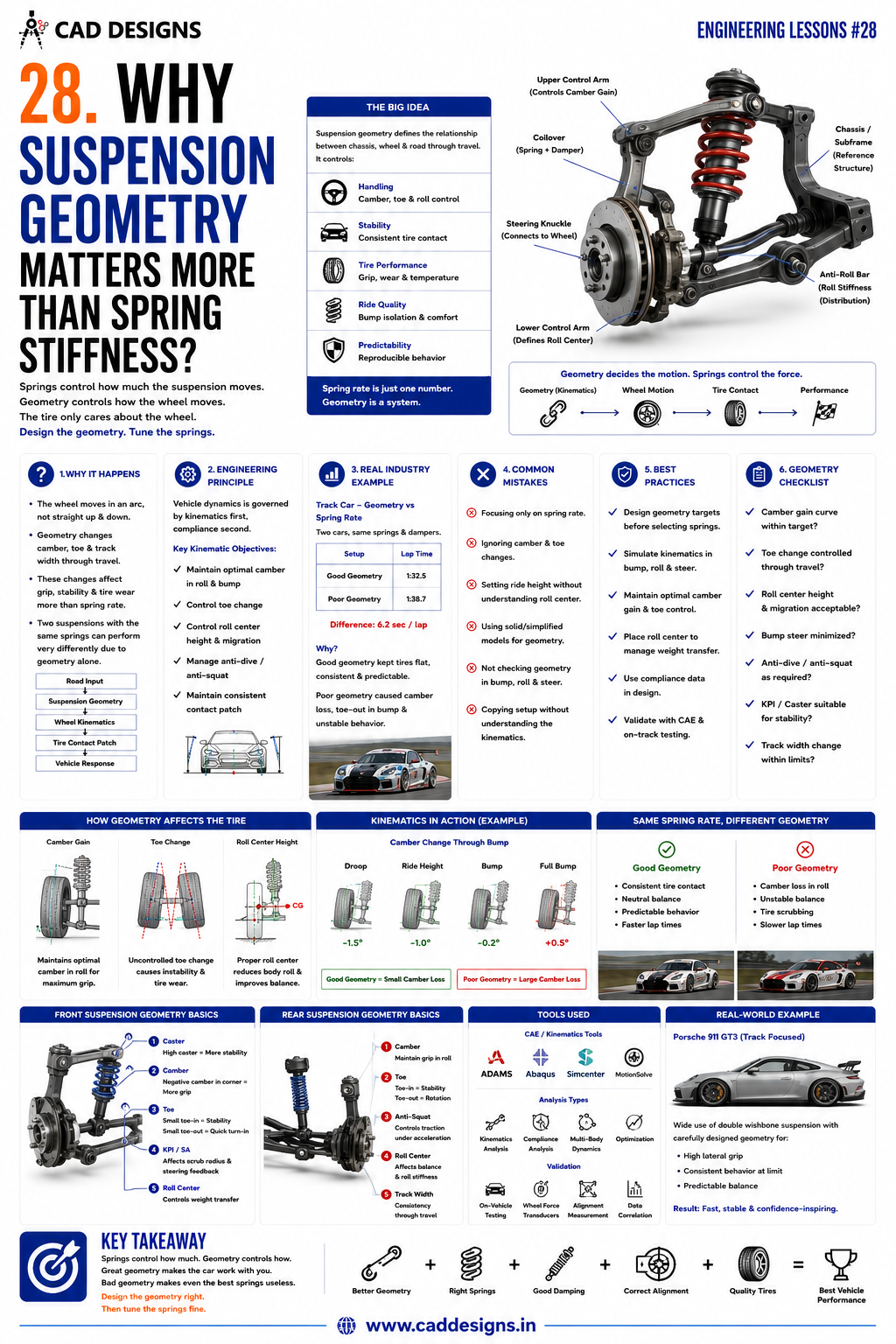
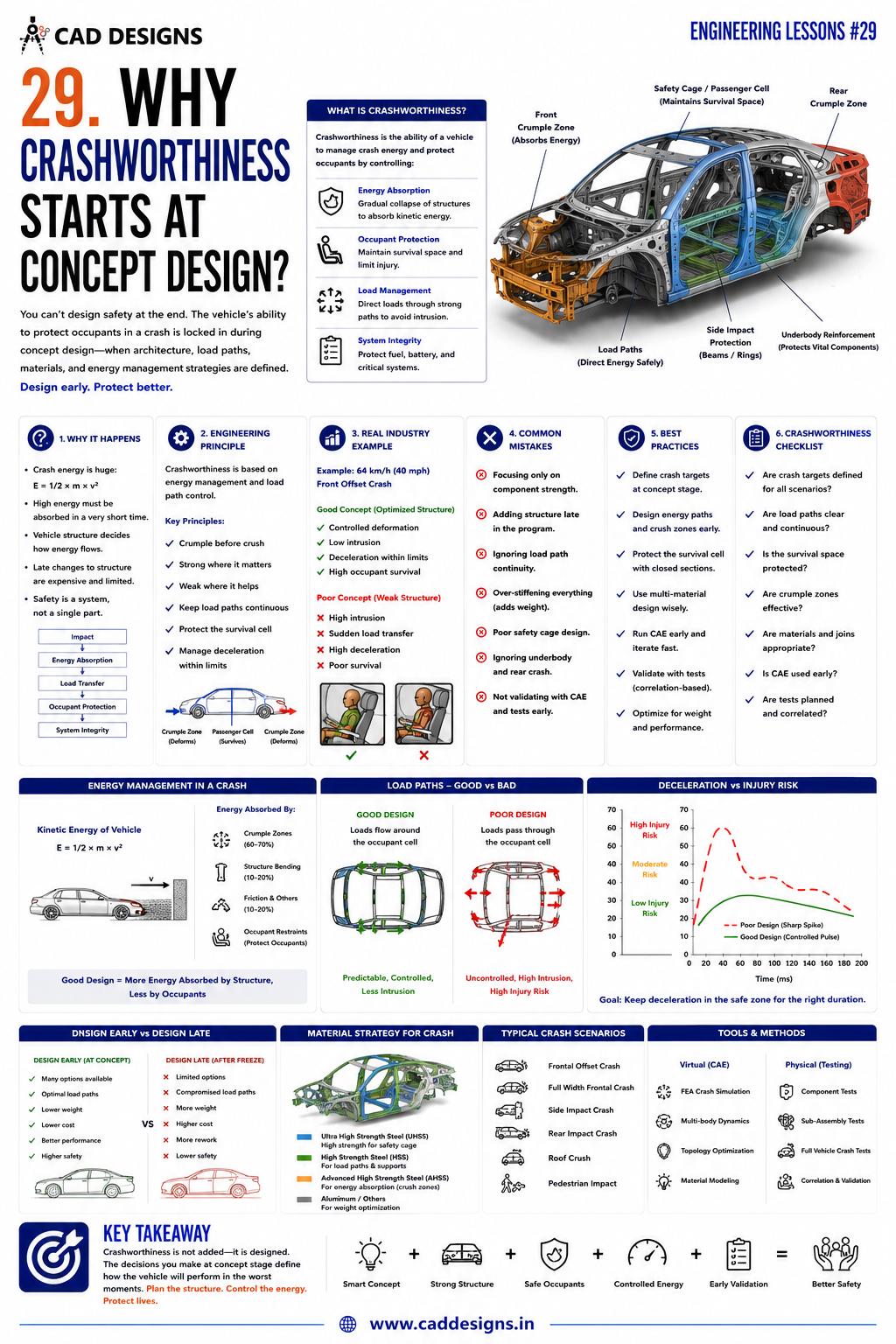
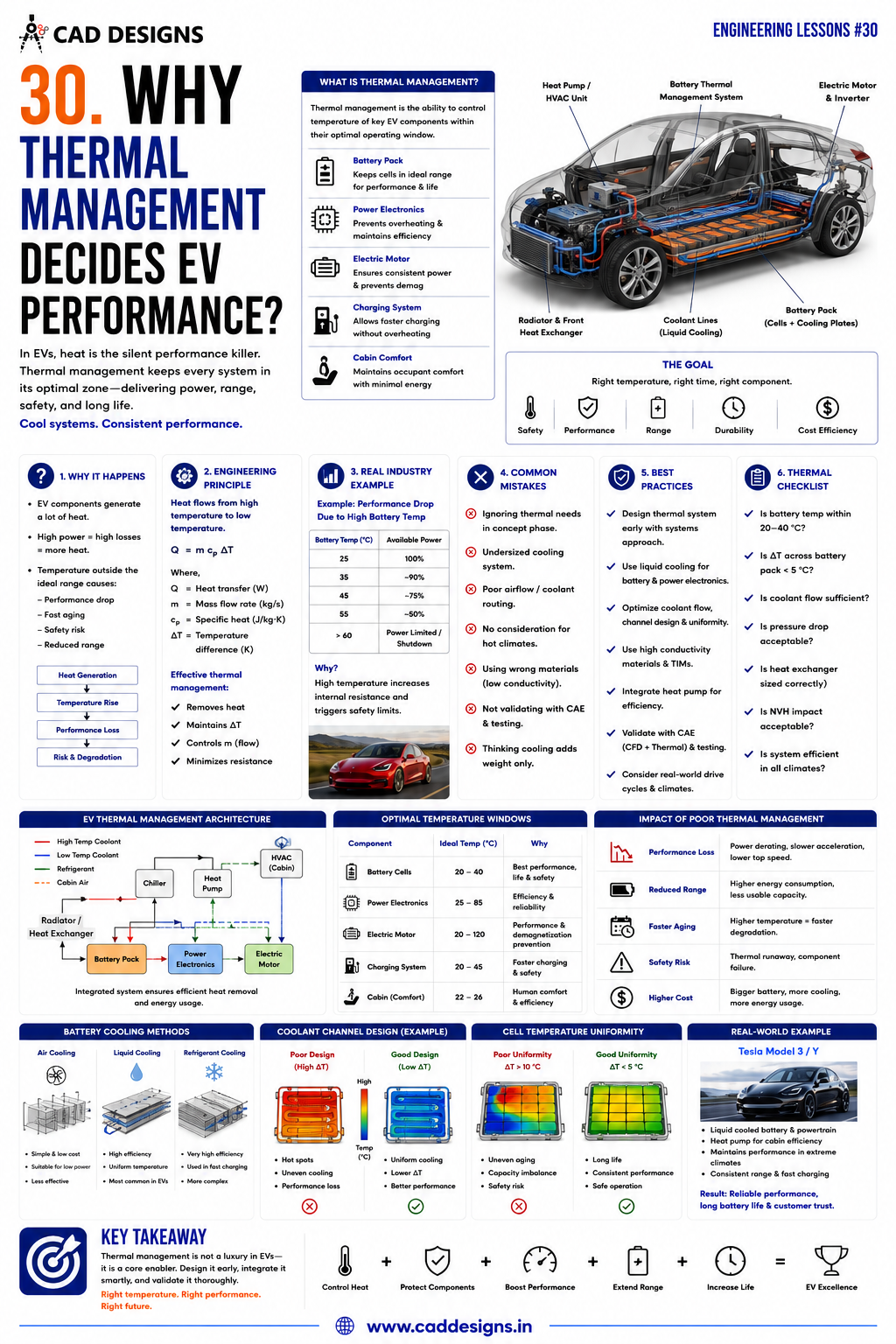
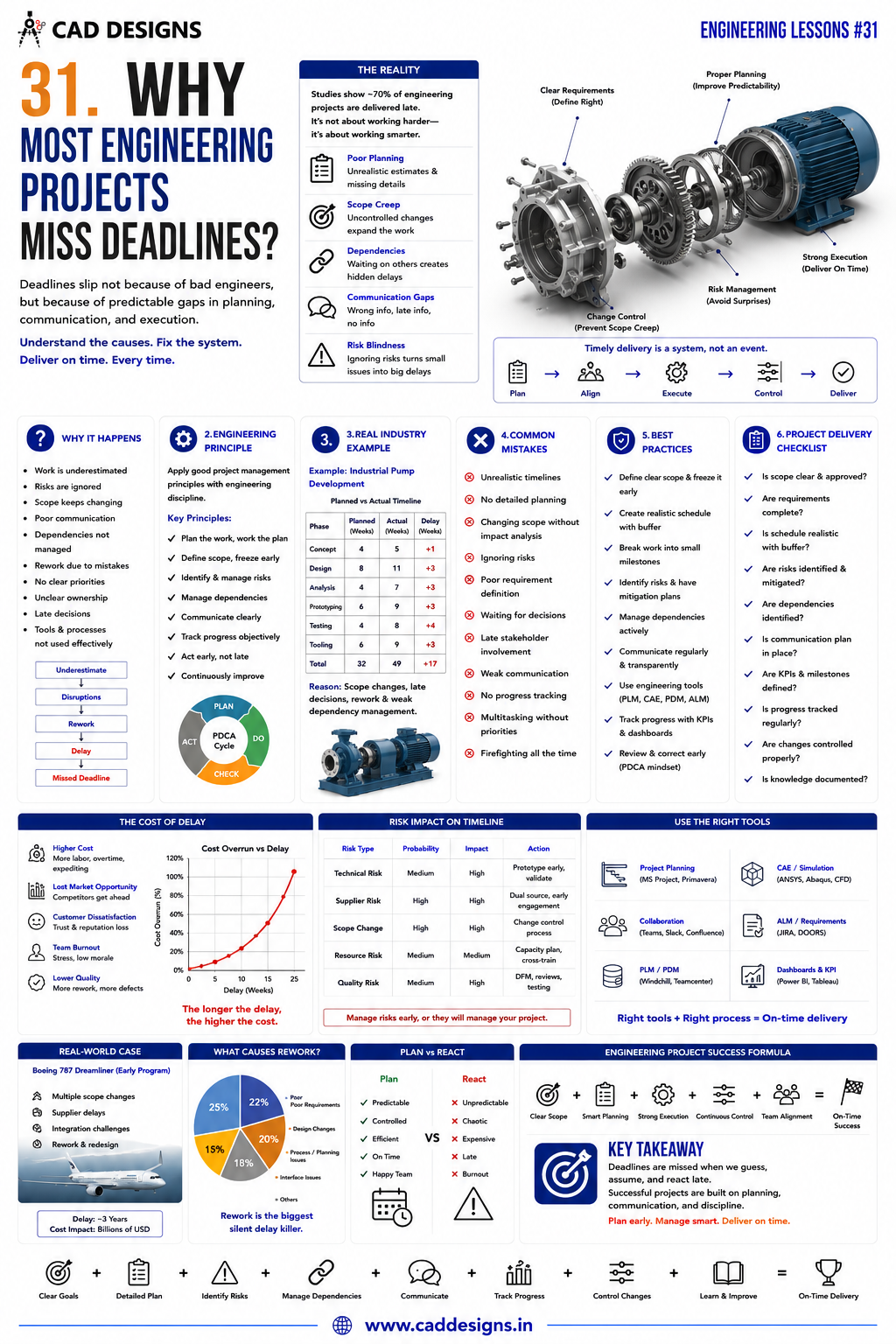
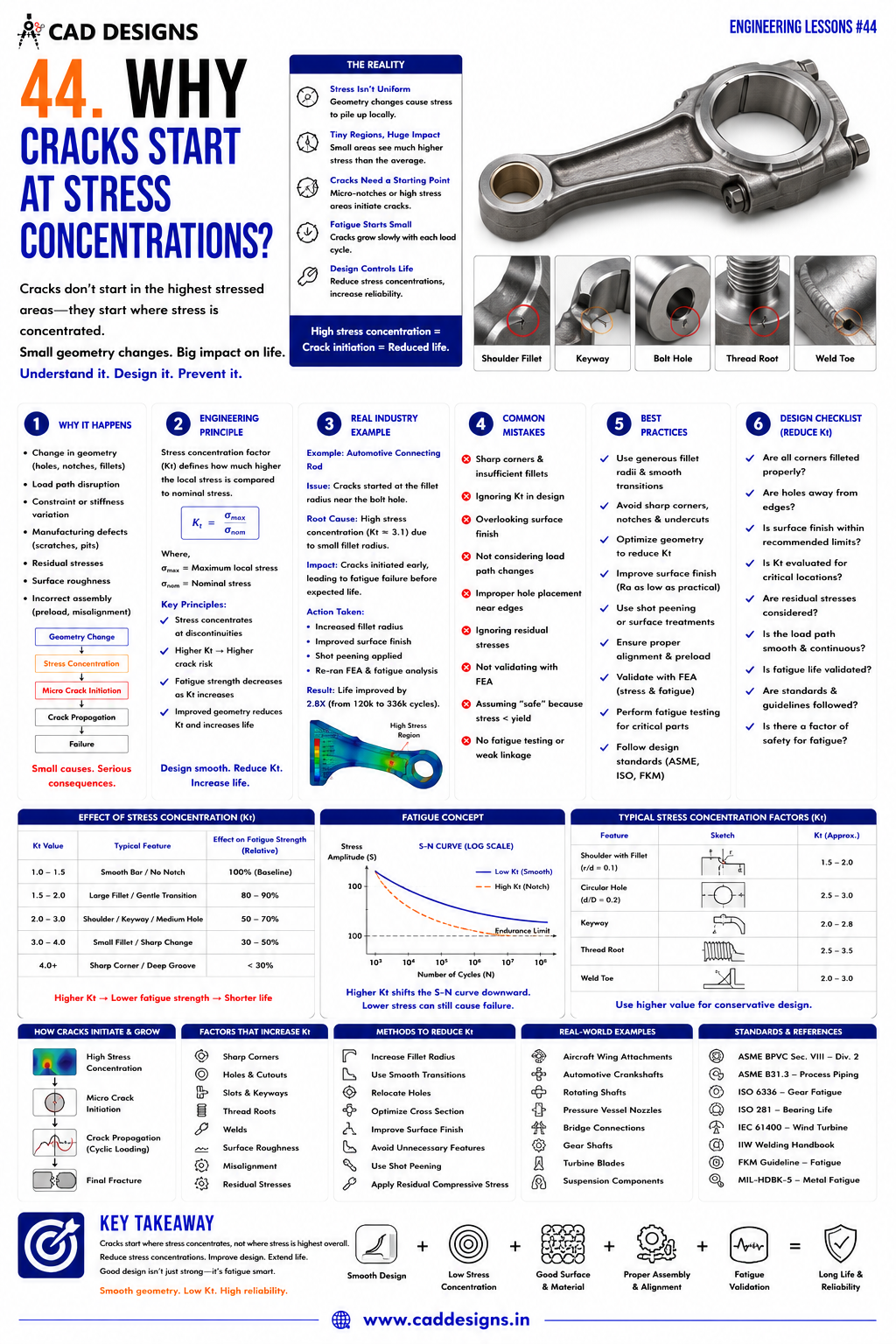
Engineering Lessons Every Mechanical Engineer Should Know
60 Real-World Engineering Lessons for Design, Manufacturing, Automotive, and Product Development Professionals
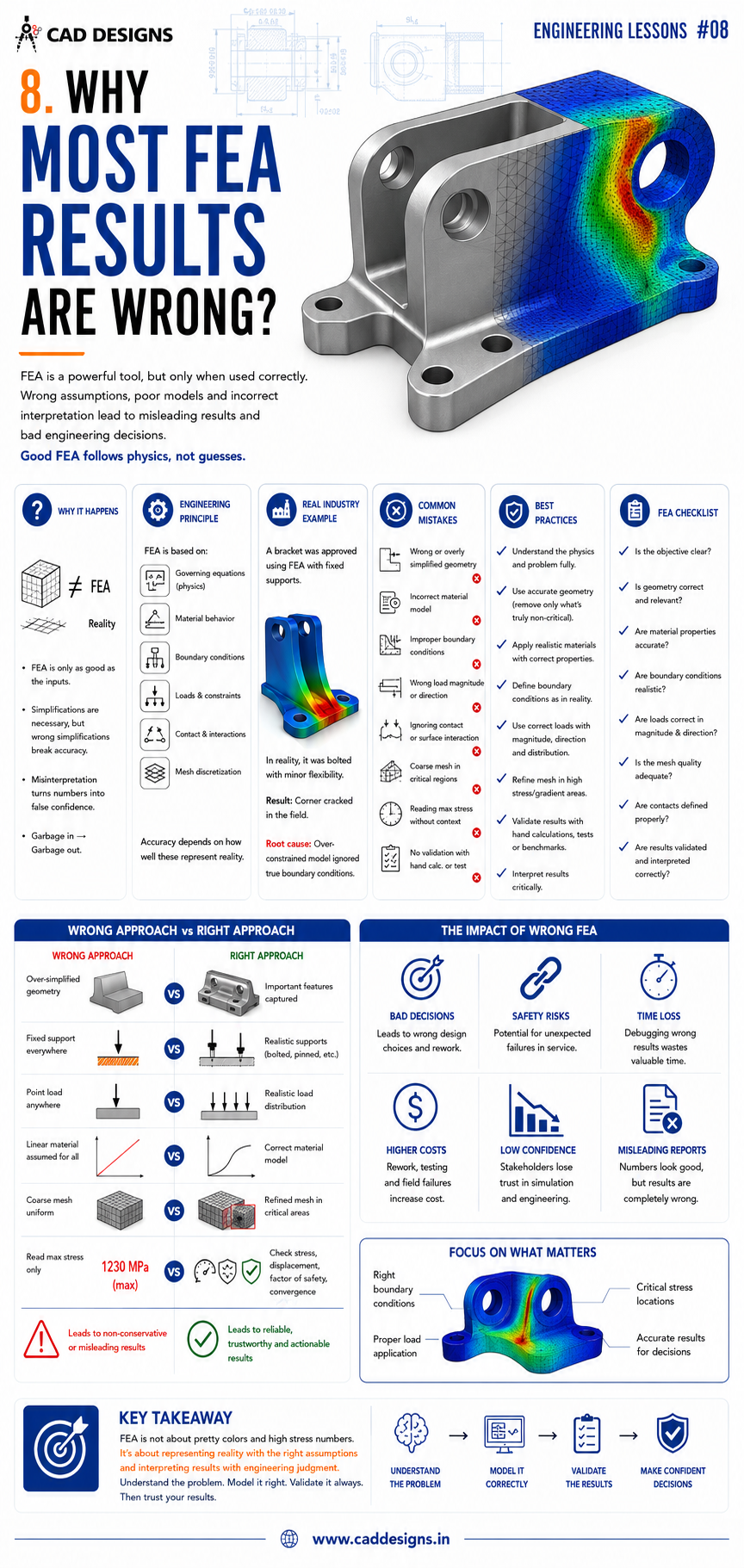
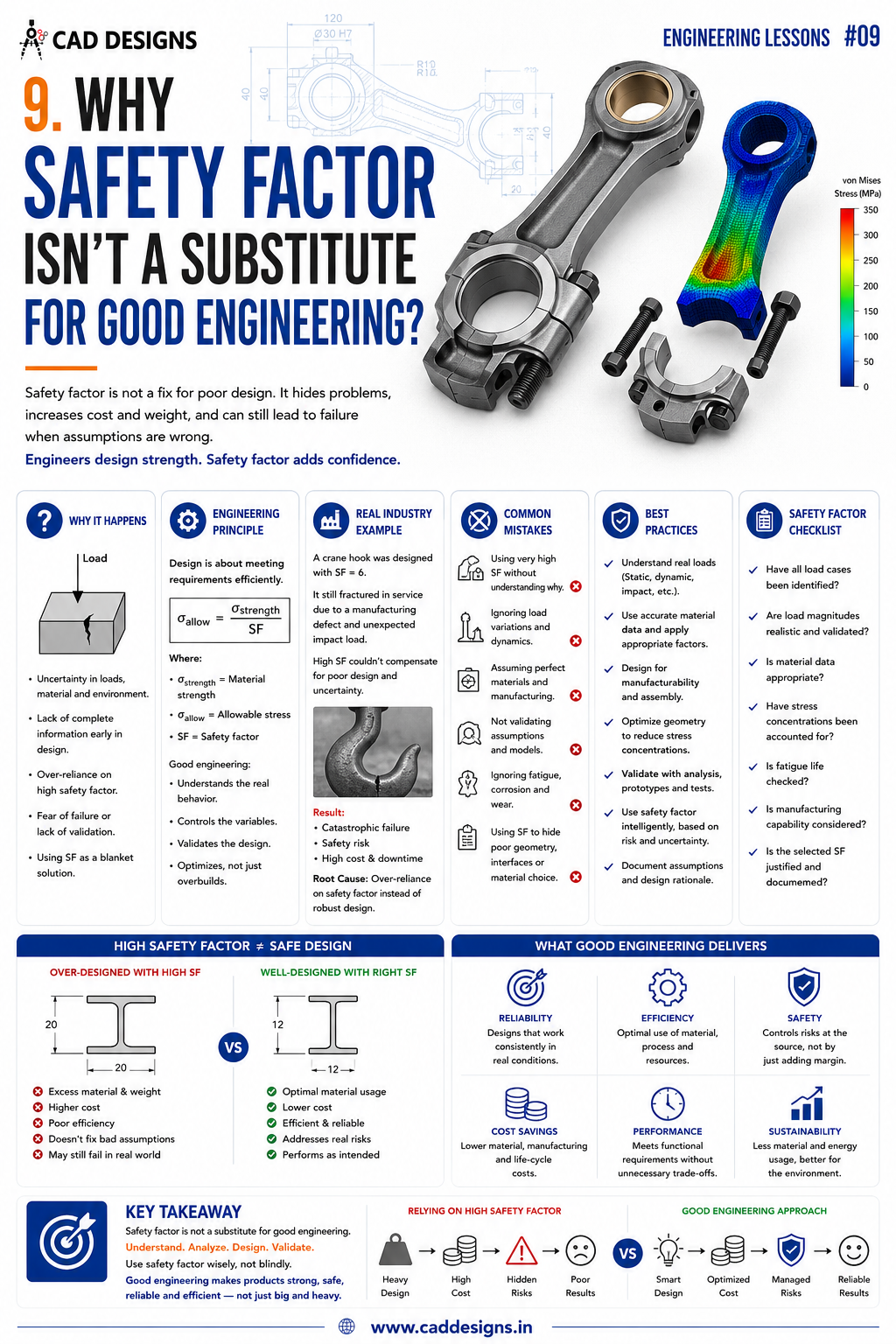
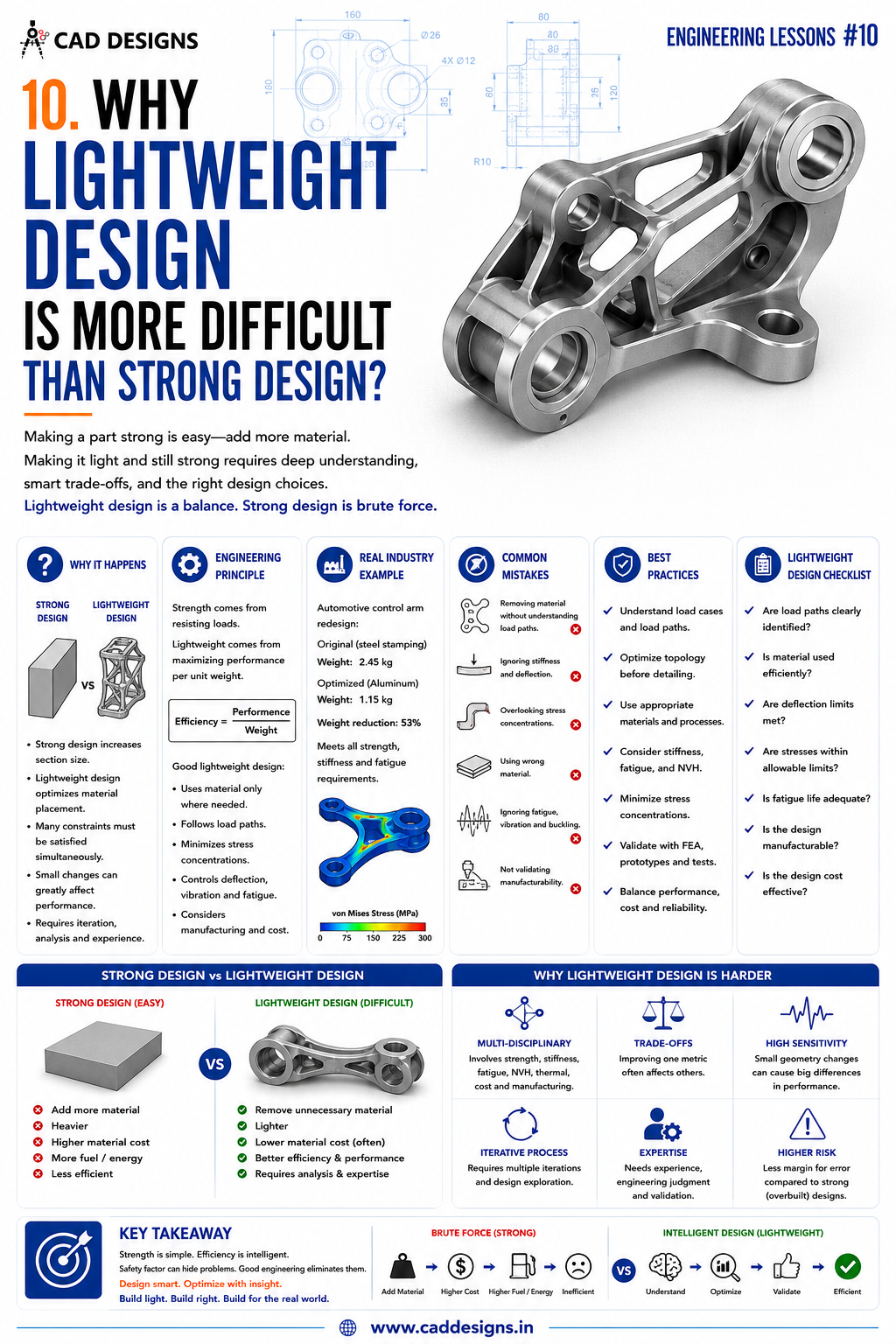
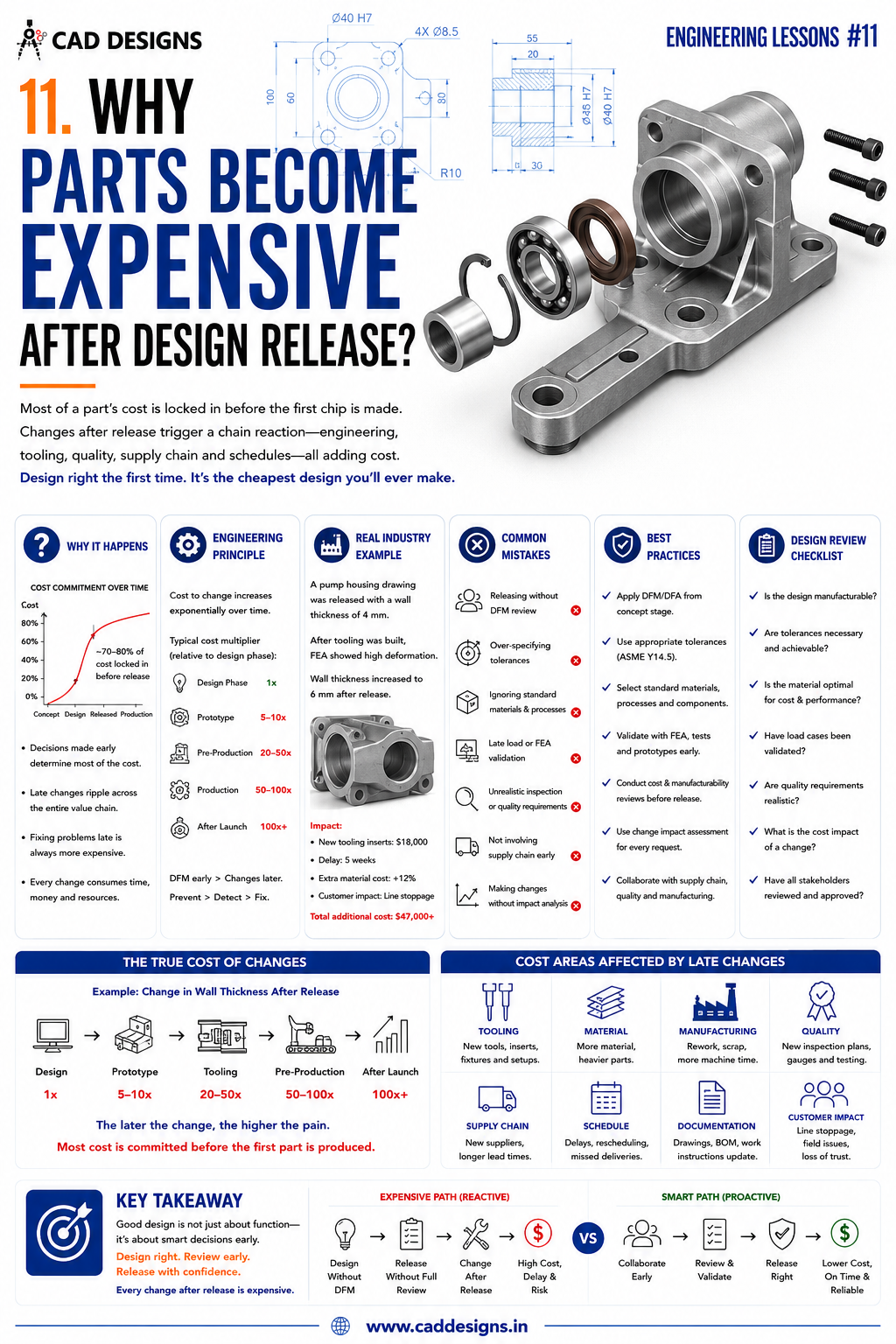
Engineering is not just about formulas, CAD models, simulations, or standards. As engineers gain experience, they realize that the biggest challenges are rarely found in textbooks. Real engineering is about understanding failures, trade-offs, manufacturability, reliability, cost, and system-level thinking.
Many engineering problems occur not because engineers lack technical knowledge, but because they overlook practical lessons learned from years of design reviews, production issues, field failures, and product development projects.
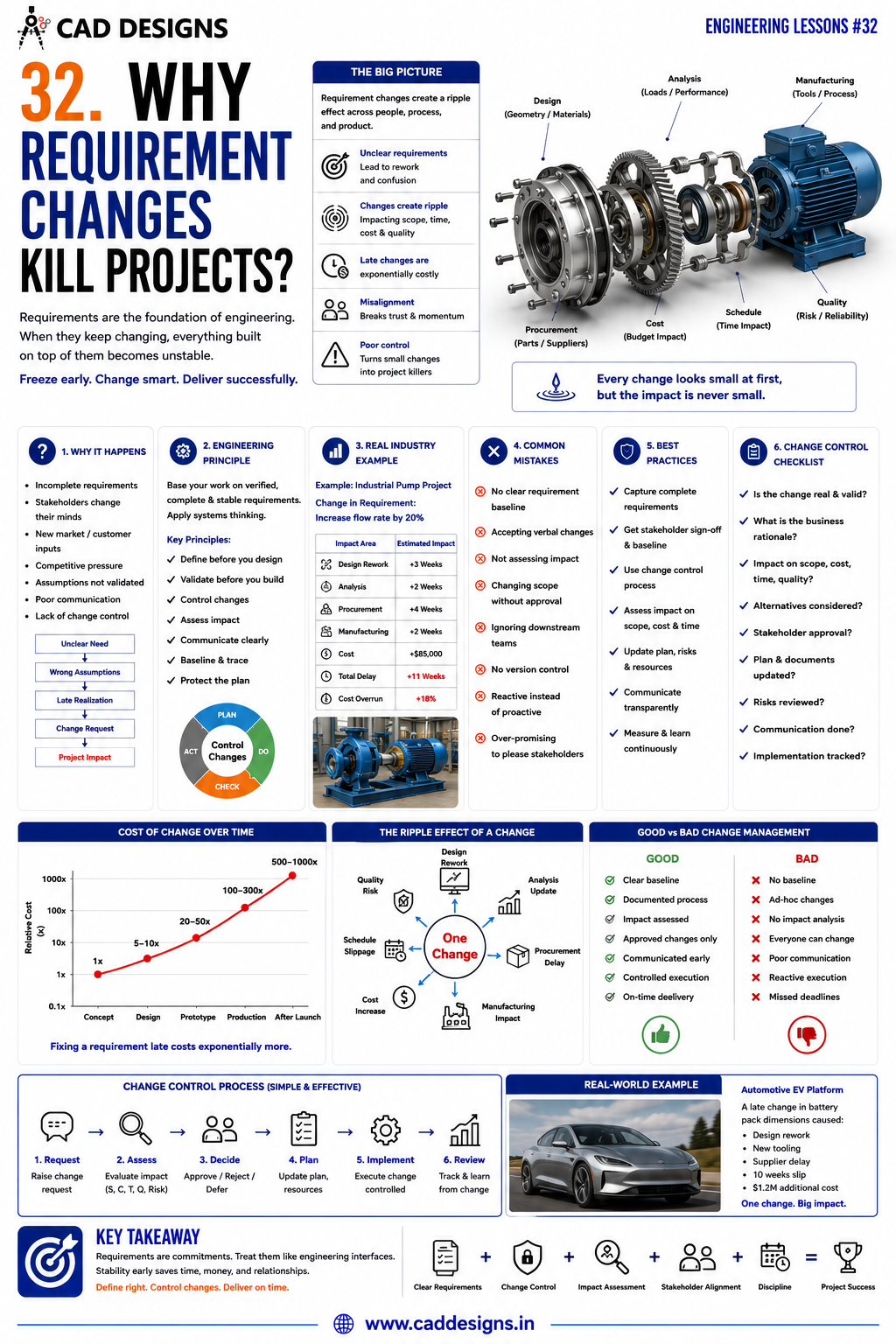
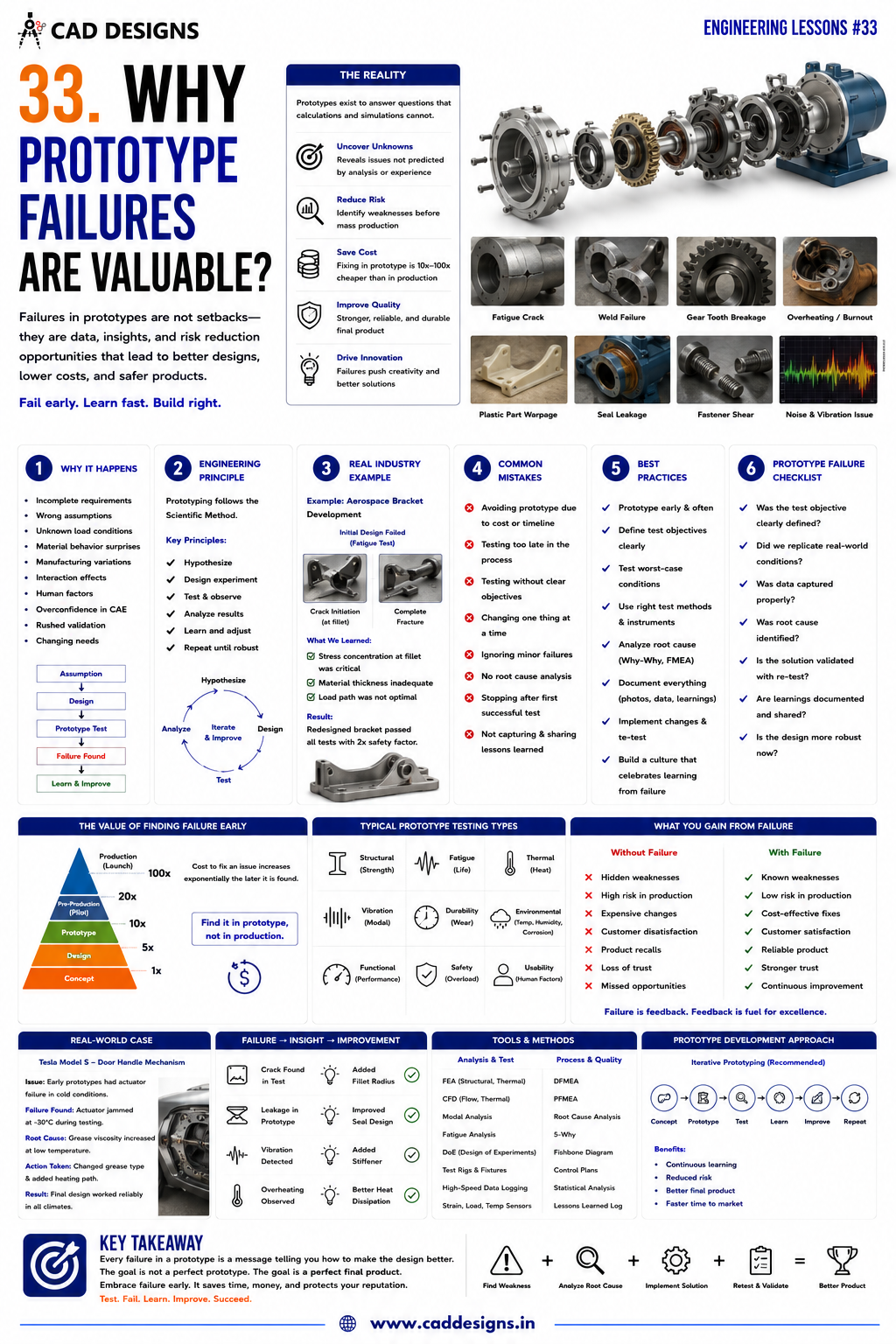
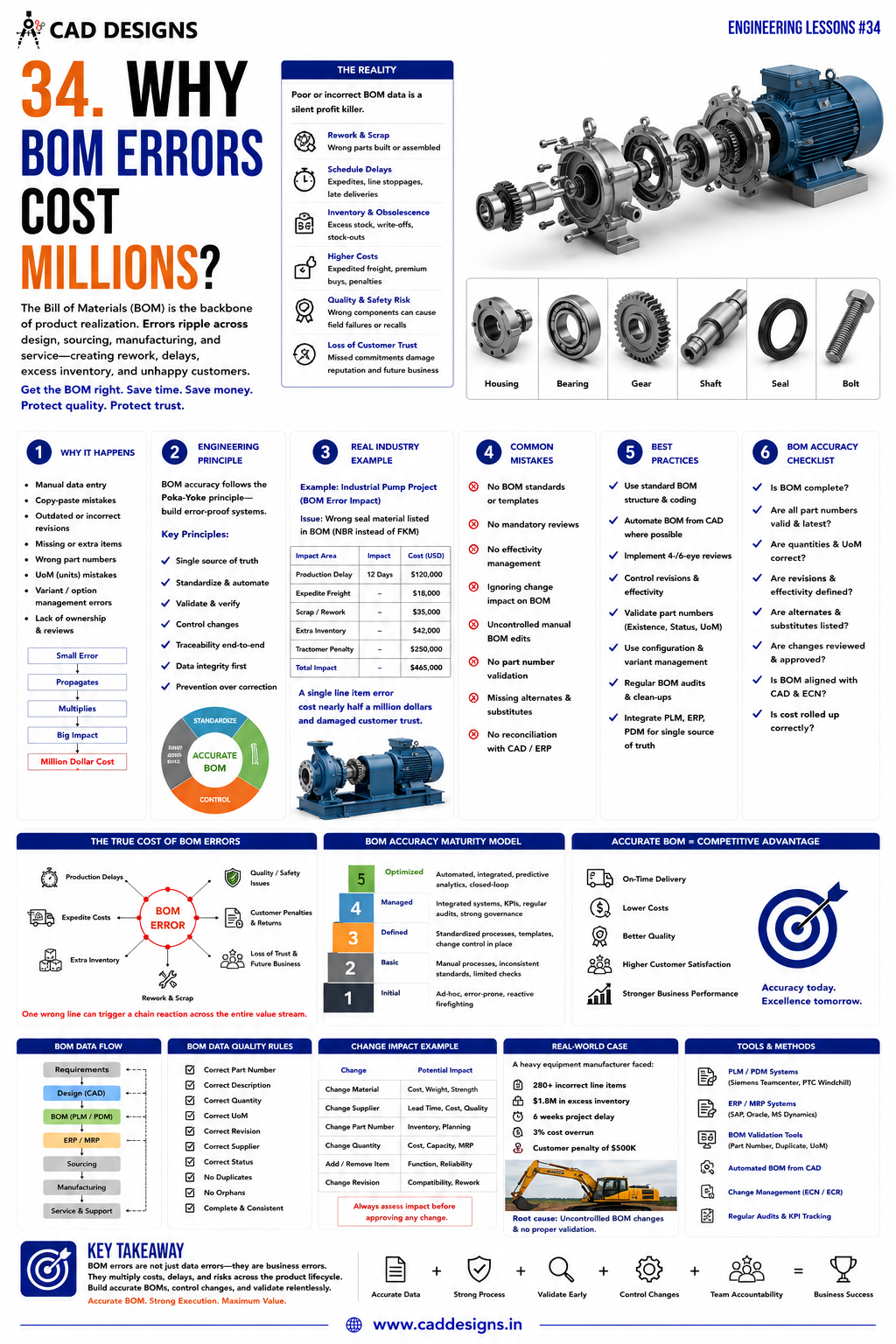
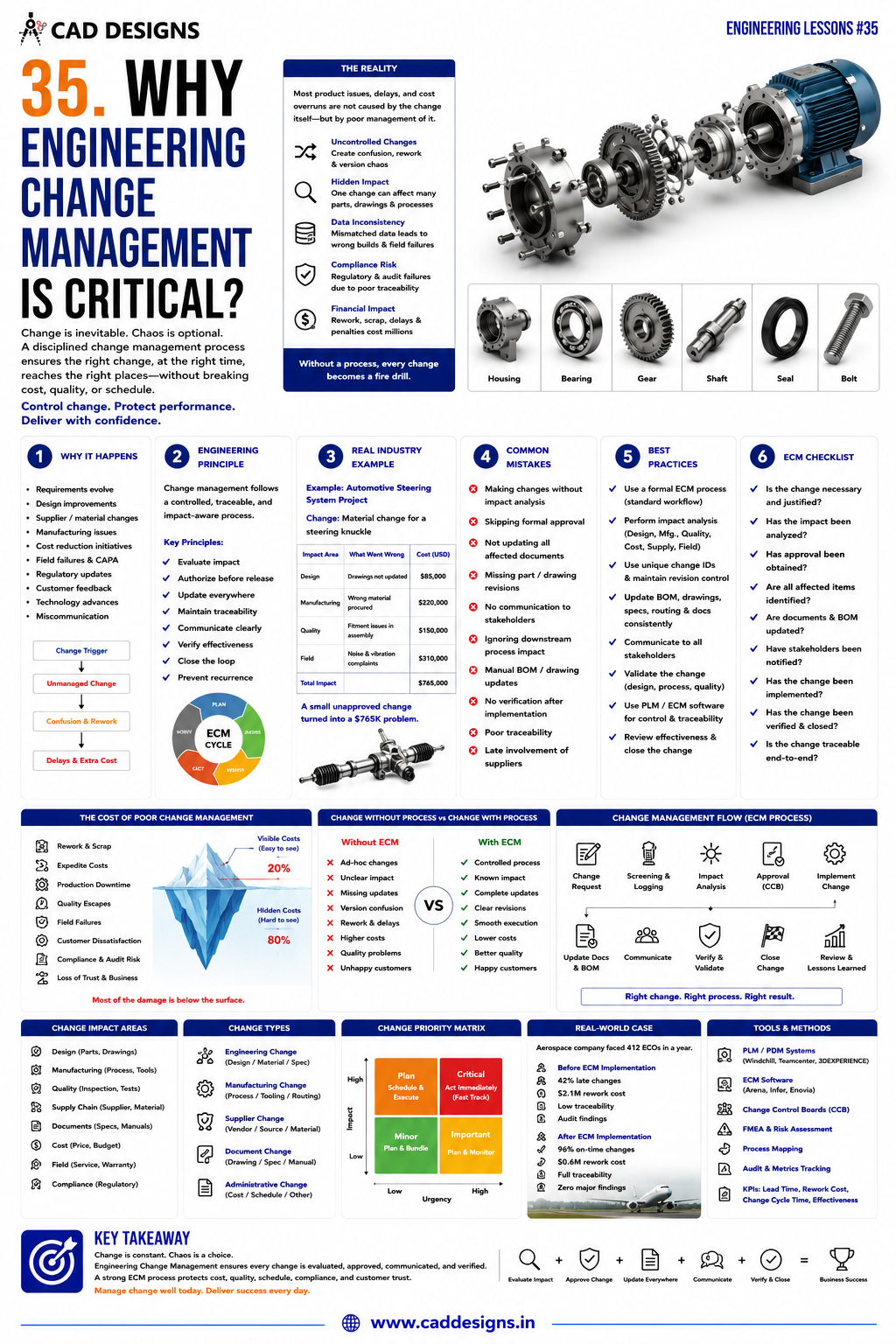
To help engineers strengthen their practical engineering knowledge, we are launching the Engineering Lessons Series. This series focuses on real-world engineering principles that every experienced engineer should understand.
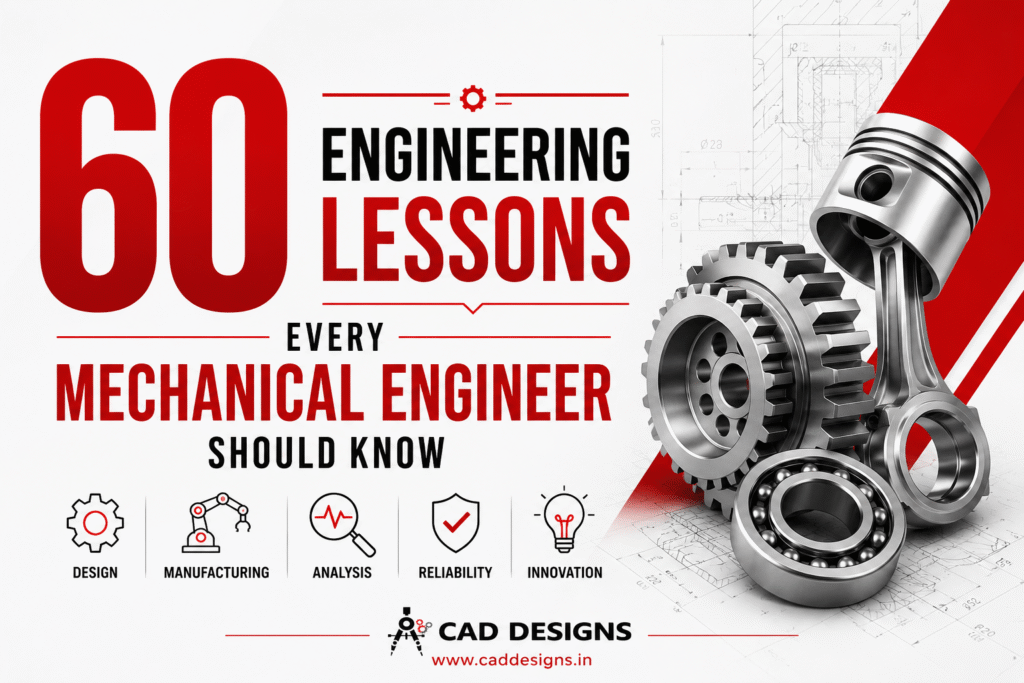
60 Engineering Lessons Every Mechanical Engineer Should Know
Why This Series?
Most engineering content focuses on calculations and theory. However, successful engineers understand:
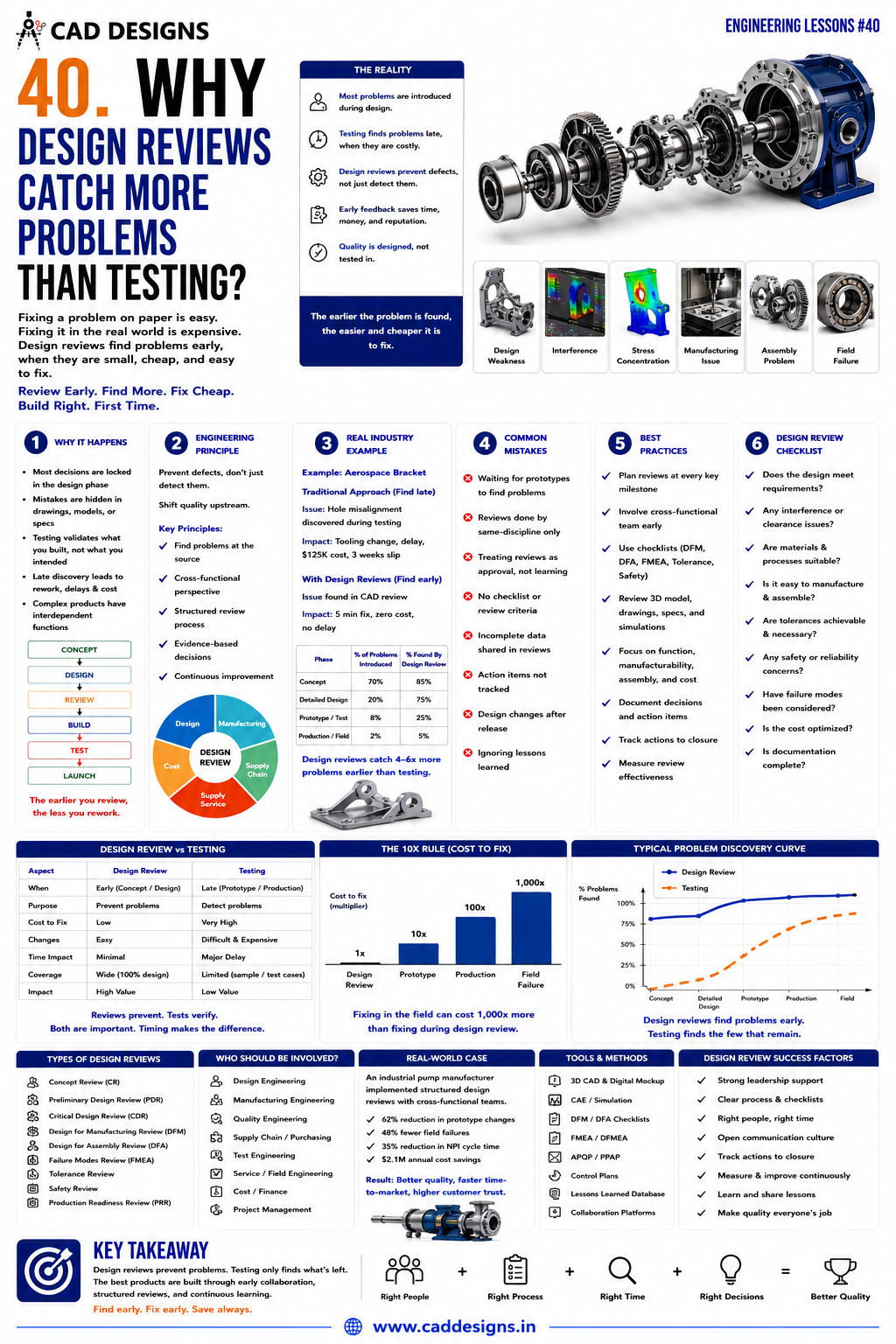
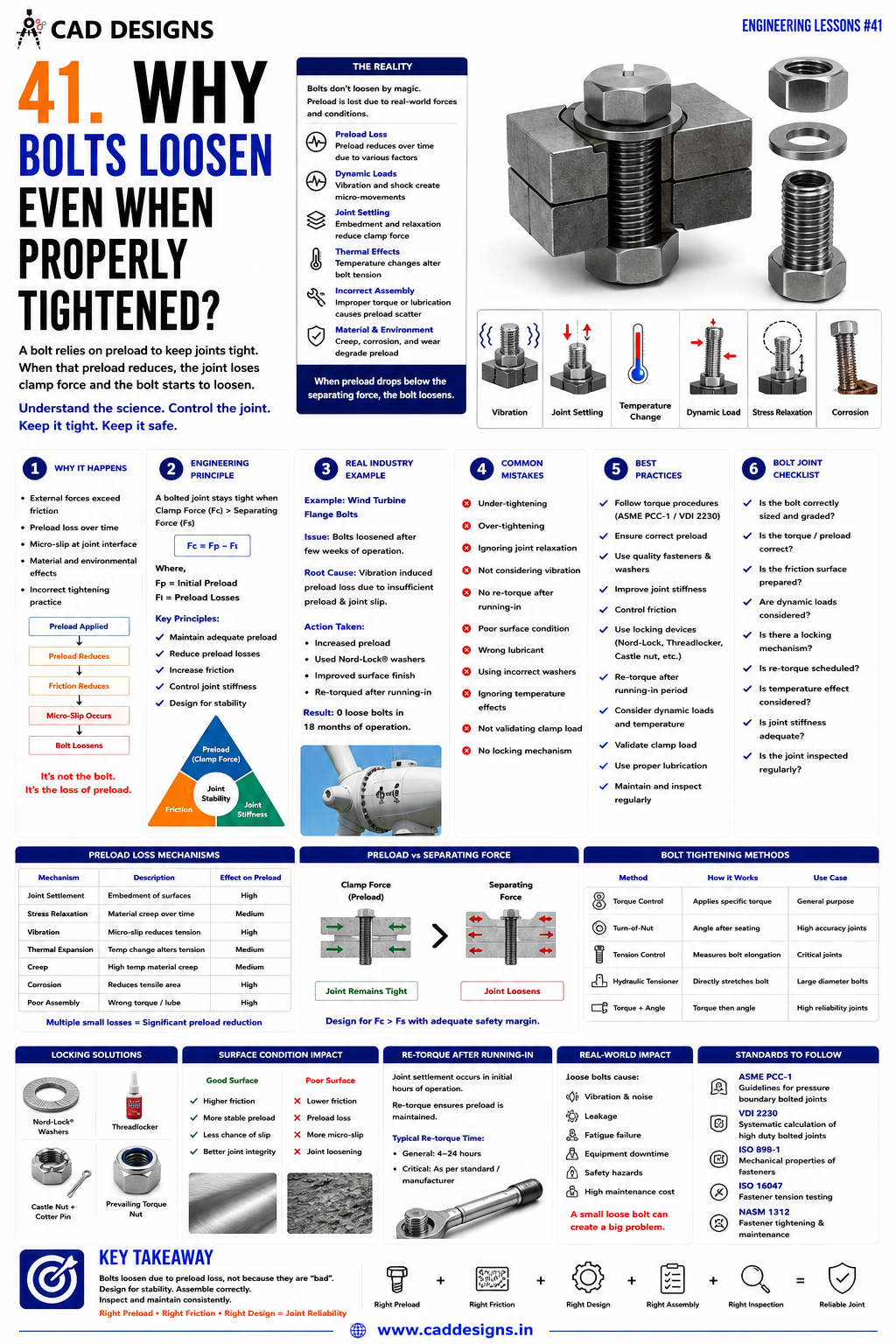
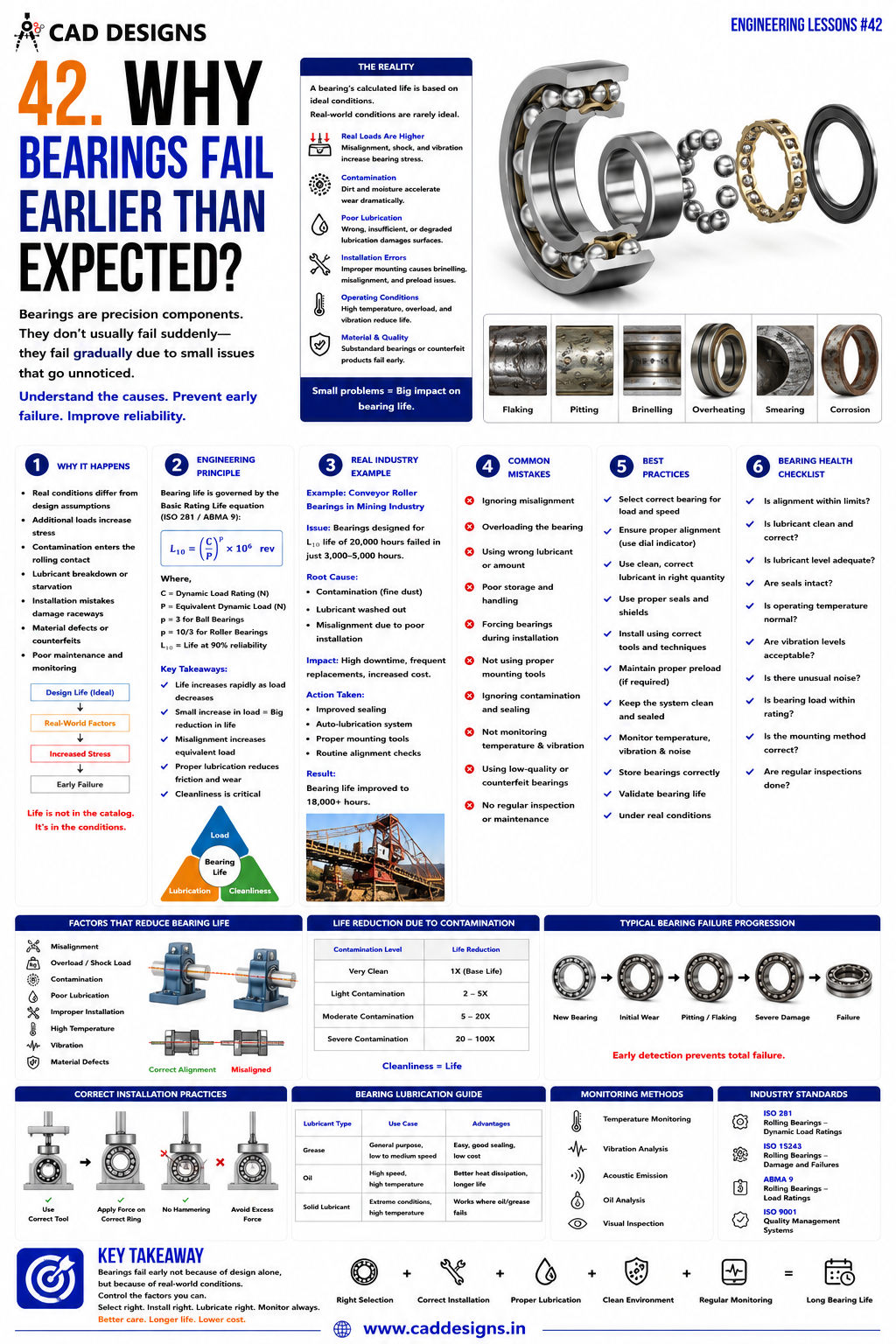
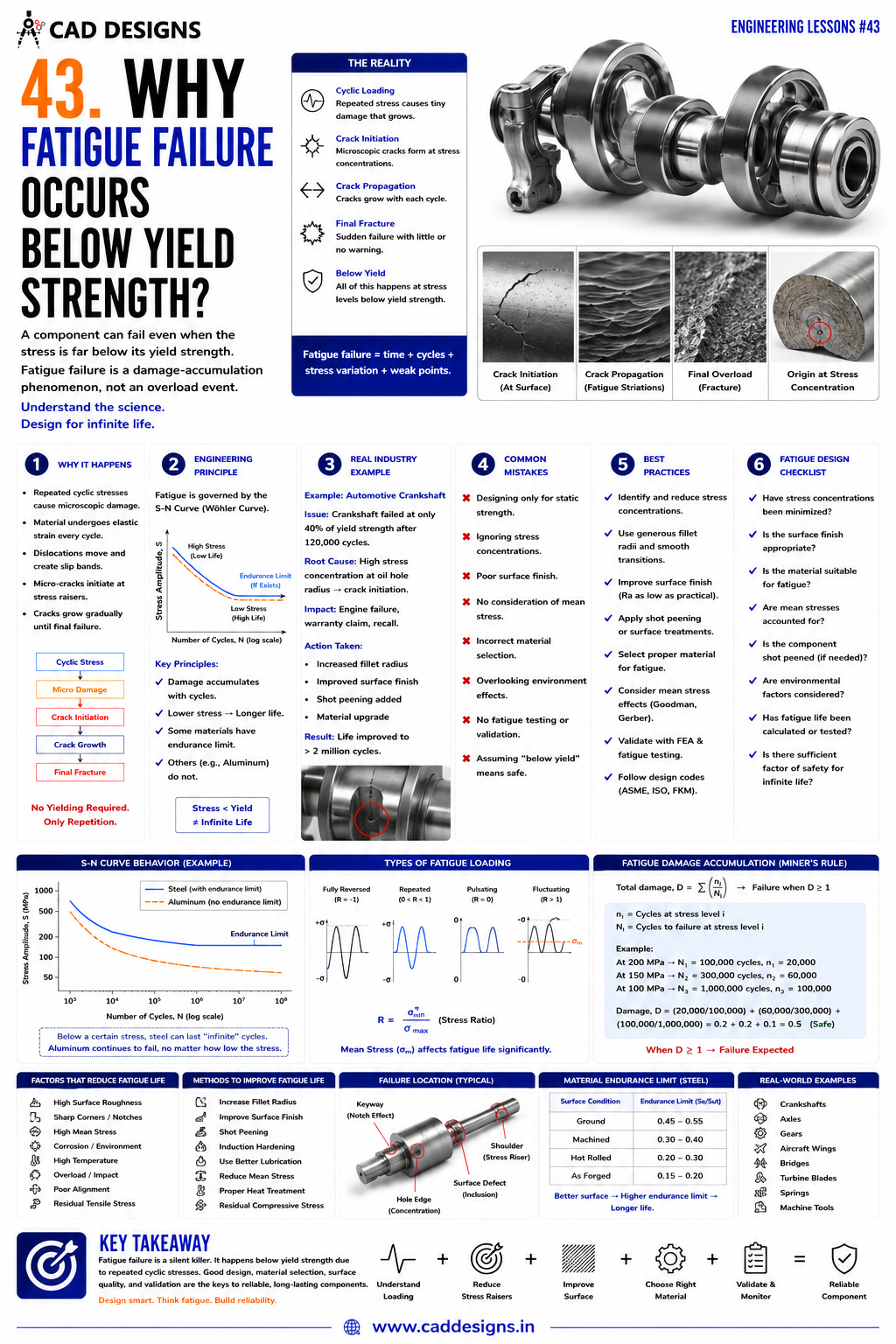
Why products fail in the field
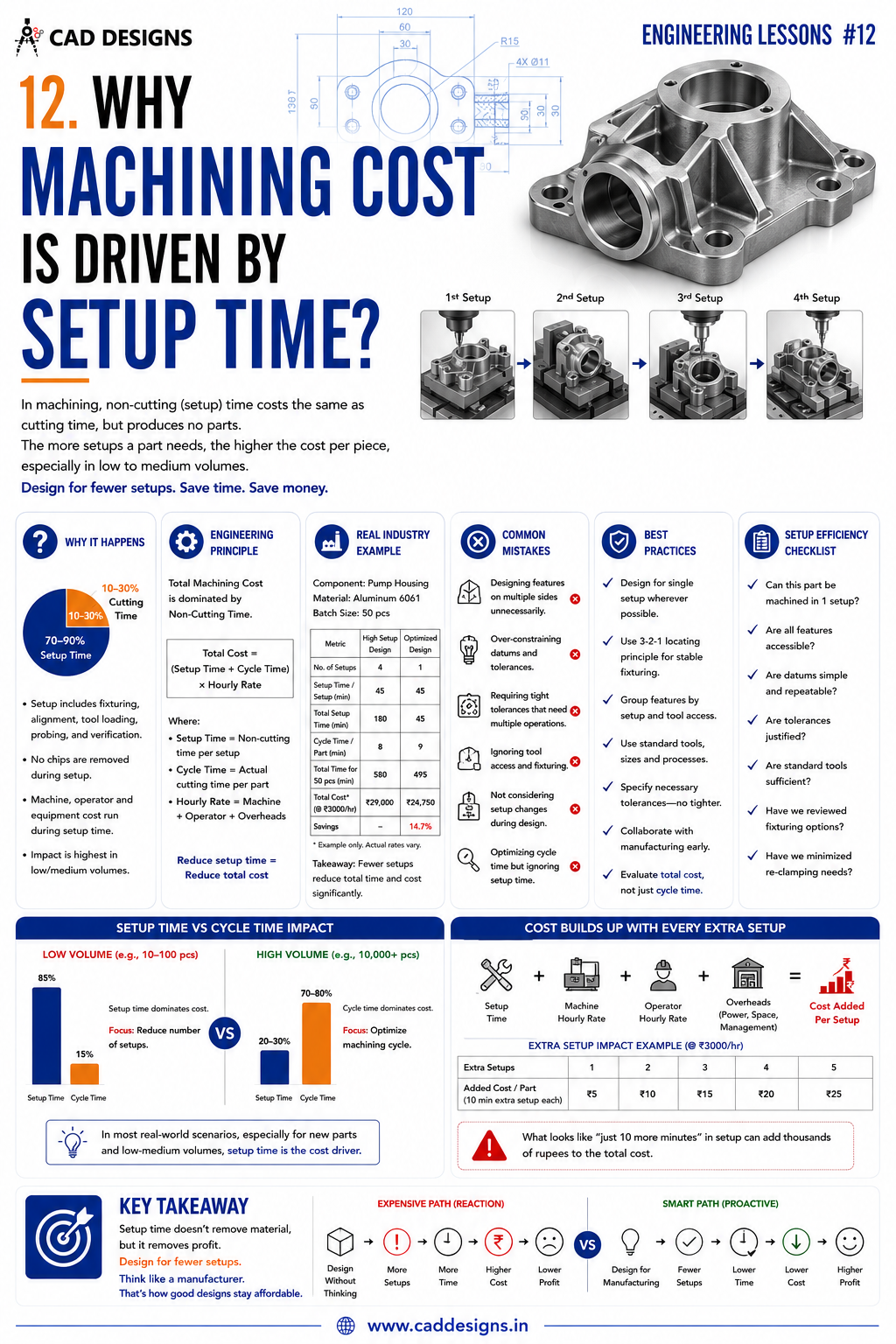
Why manufacturing costs increase
Why projects miss deadlines
Why tolerances matter
Why design decisions affect reliability
Why system thinking is more important than component thinking
This series will bridge the gap between engineering theory and industrial practice.
Design Engineering Lessons
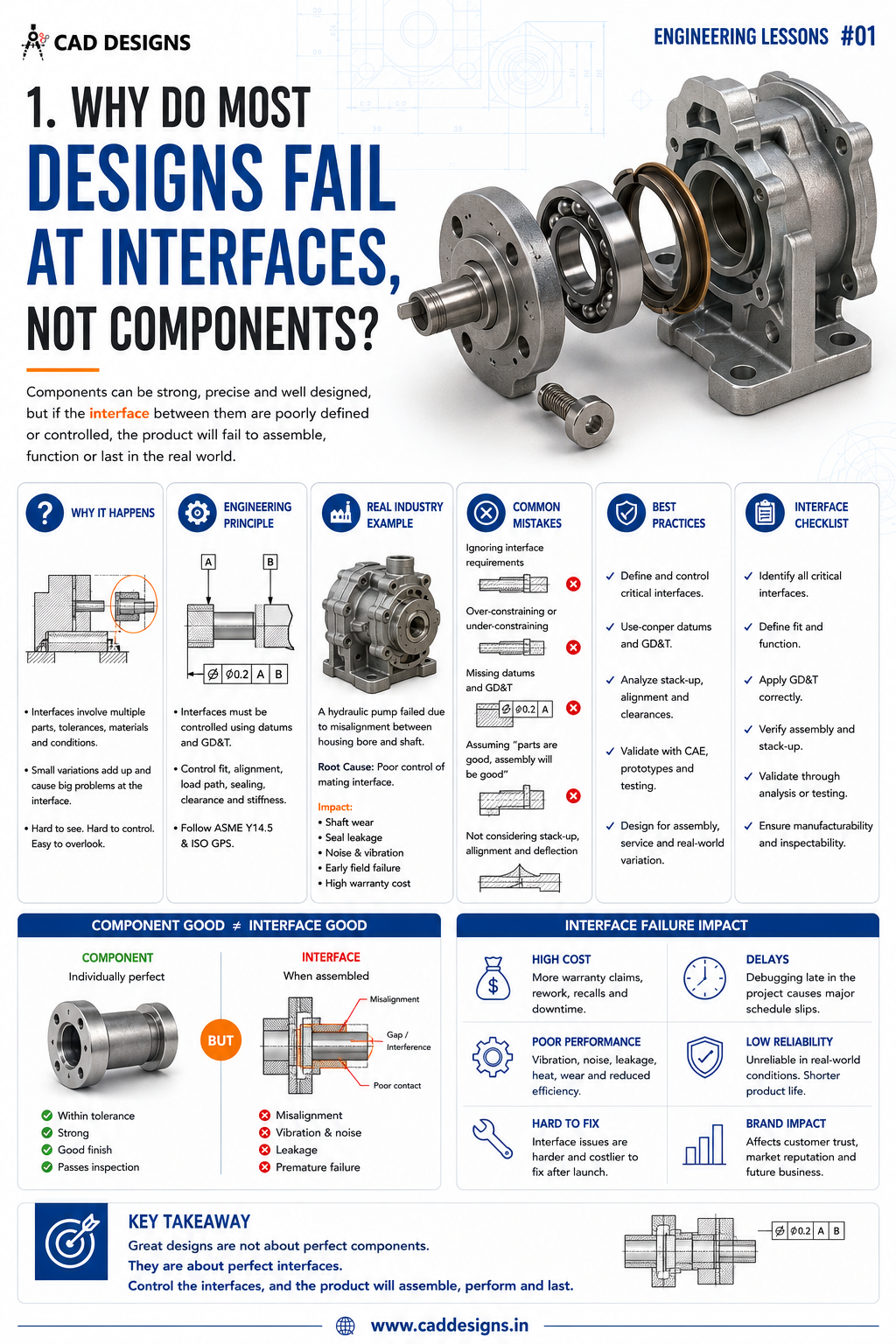
1. Why Do Most Designs Fail at Interfaces, Not Components?
Failures often occur at bolted joints, welds, bearings, seals, connectors, and mating surfaces rather than within the primary components themselves.
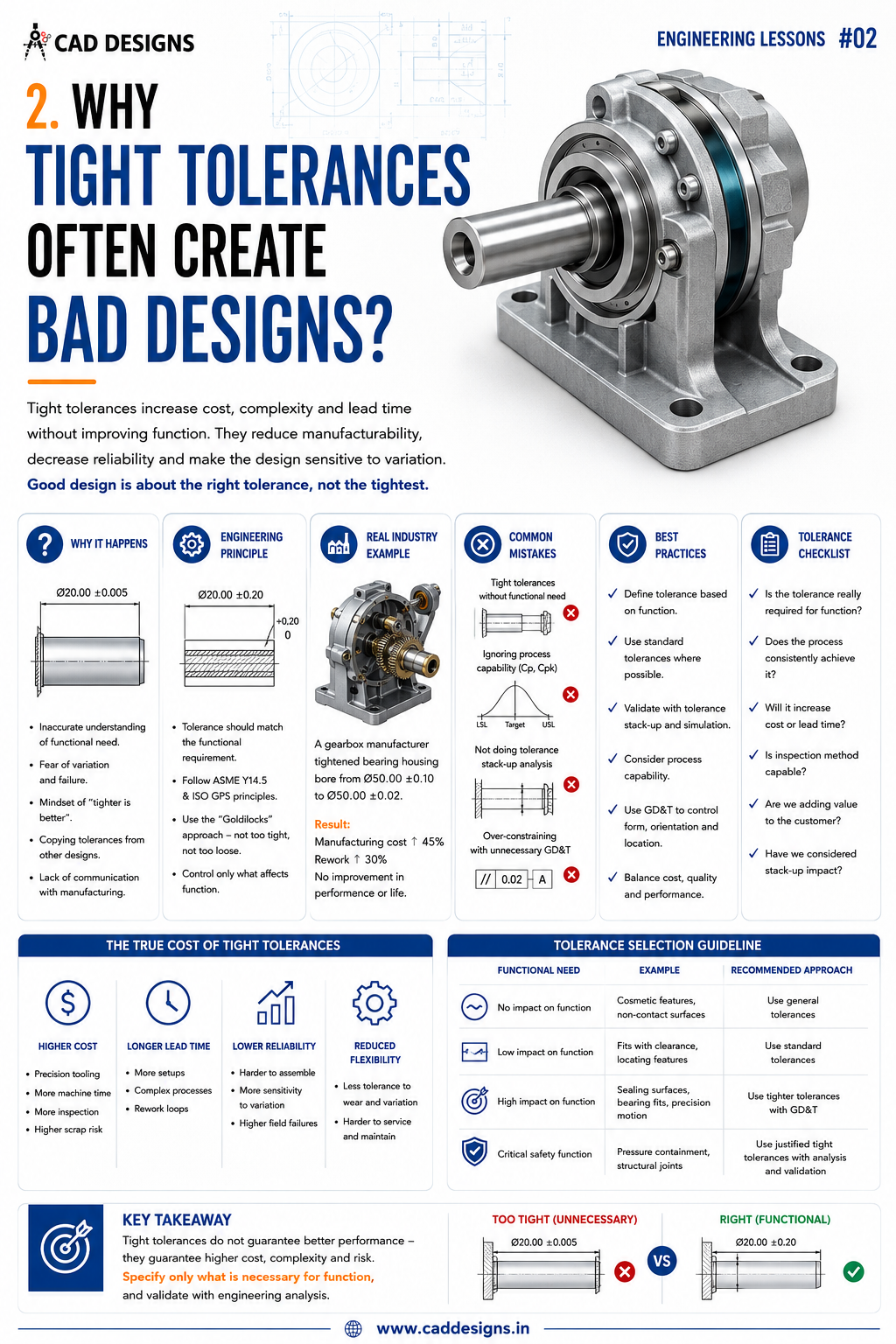
2. Why Tight Tolerances Often Create Bad Designs?
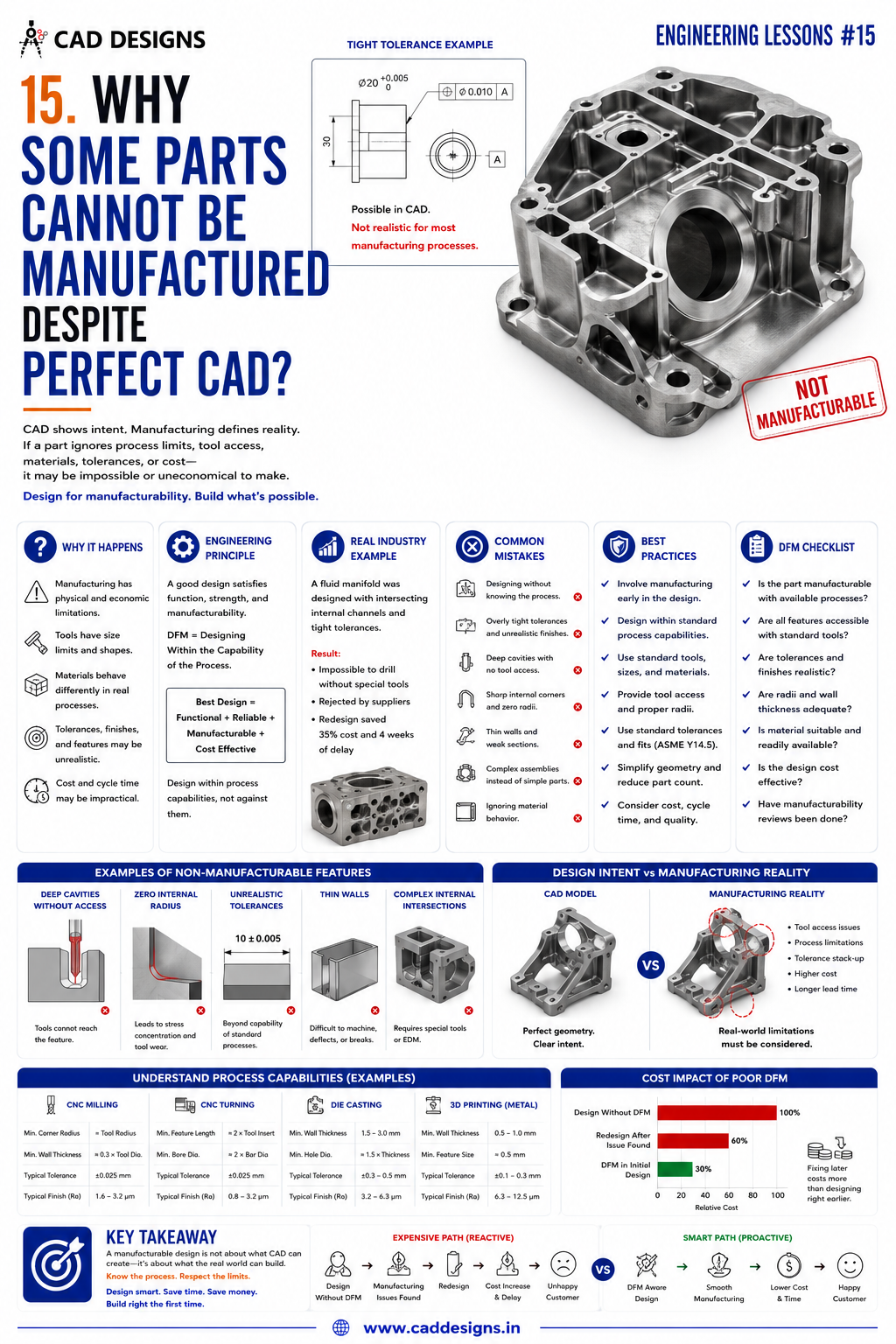
Excessively tight tolerances increase manufacturing cost, inspection complexity, and production rejection rates.
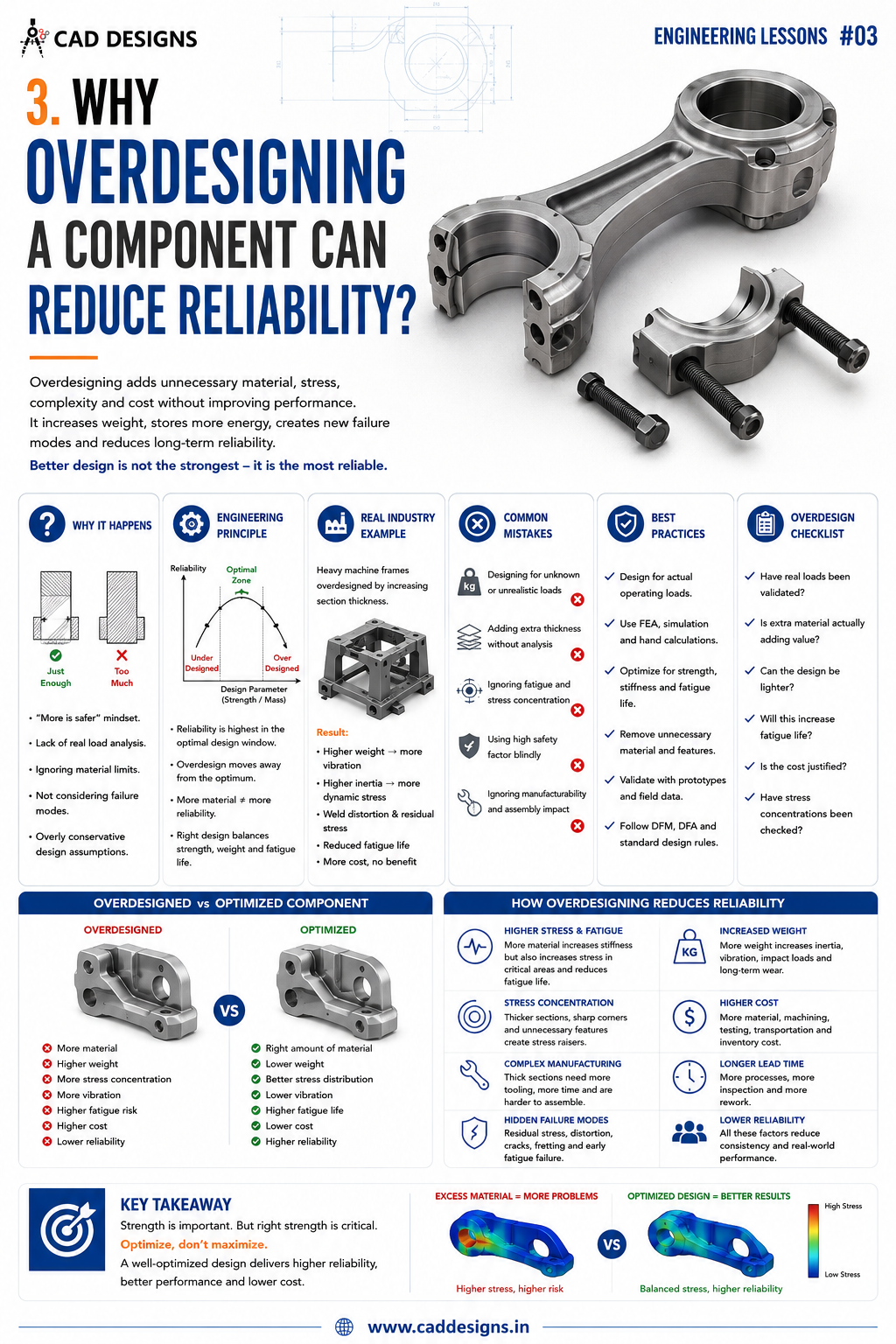
3. Why Overdesigning a Component Can Reduce Reliability?
Increasing material thickness or strength does not always improve performance. Overdesign can create stress redistribution and assembly challenges.
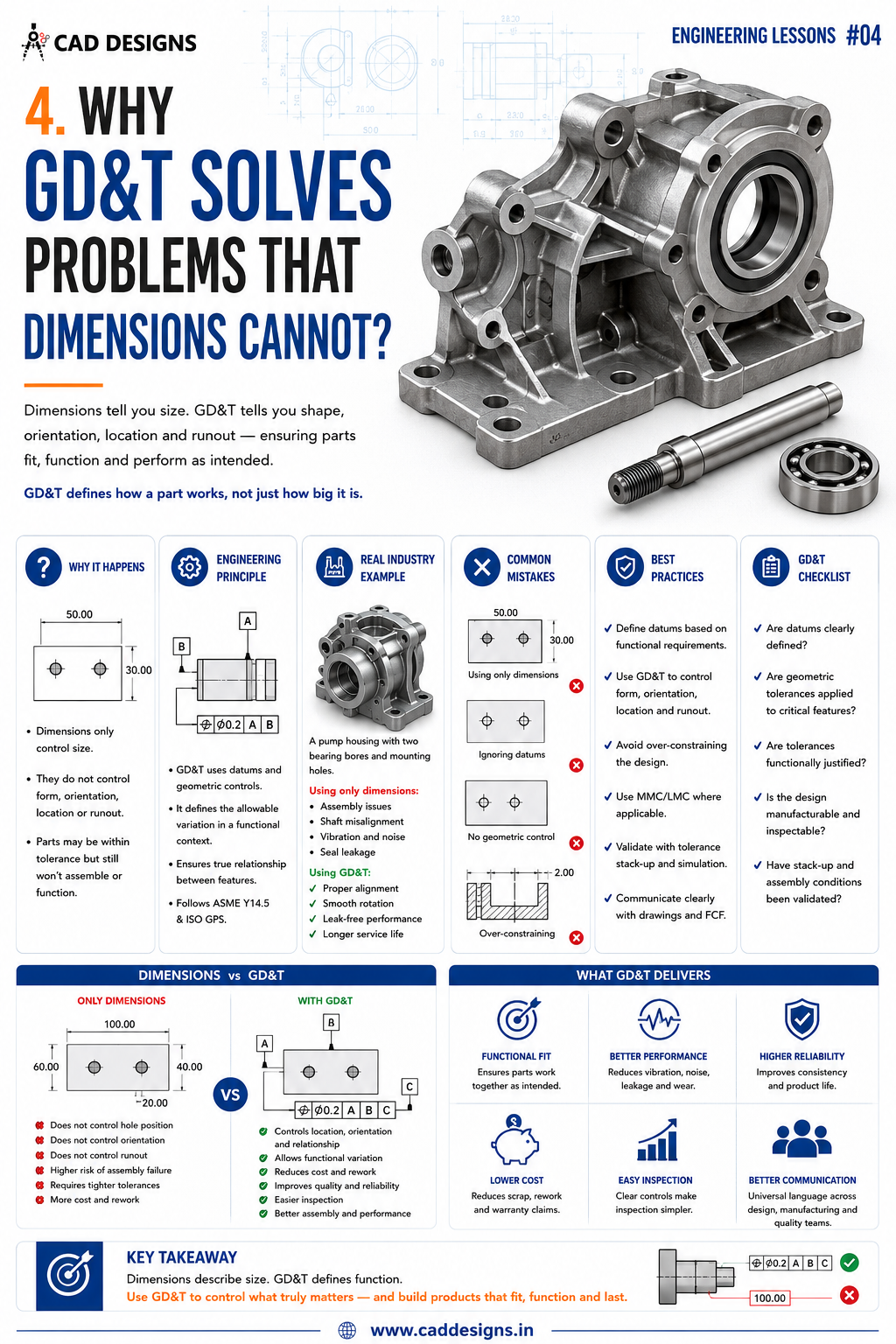
4. Why GD&T Solves Problems That Dimensions Cannot?
Geometric Dimensioning and Tolerancing ensures functional requirements are met rather than simply controlling size.
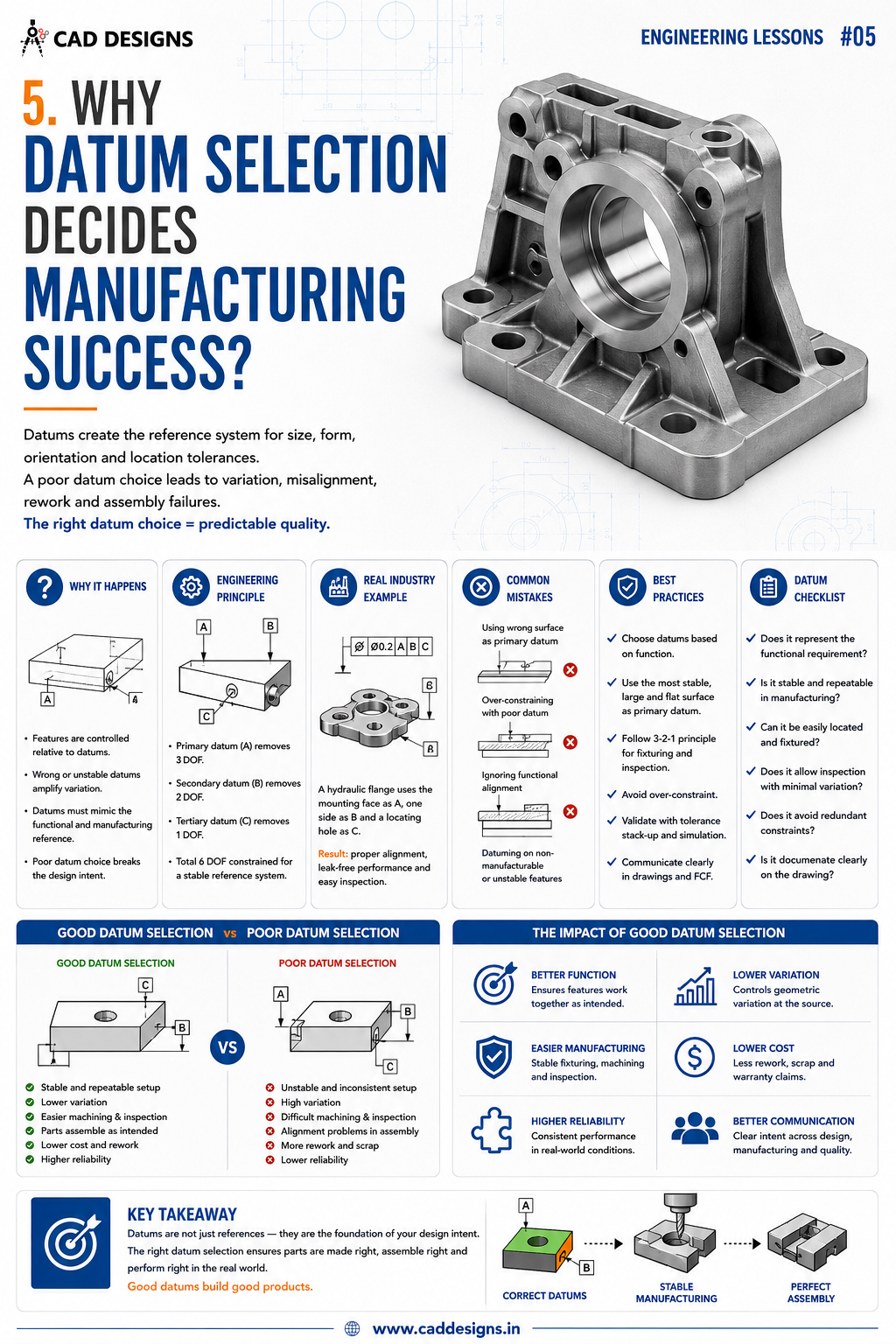
5. Why Datum Selection Decides Manufacturing Success?
Proper datum selection improves manufacturability, inspection accuracy, and assembly consistency.
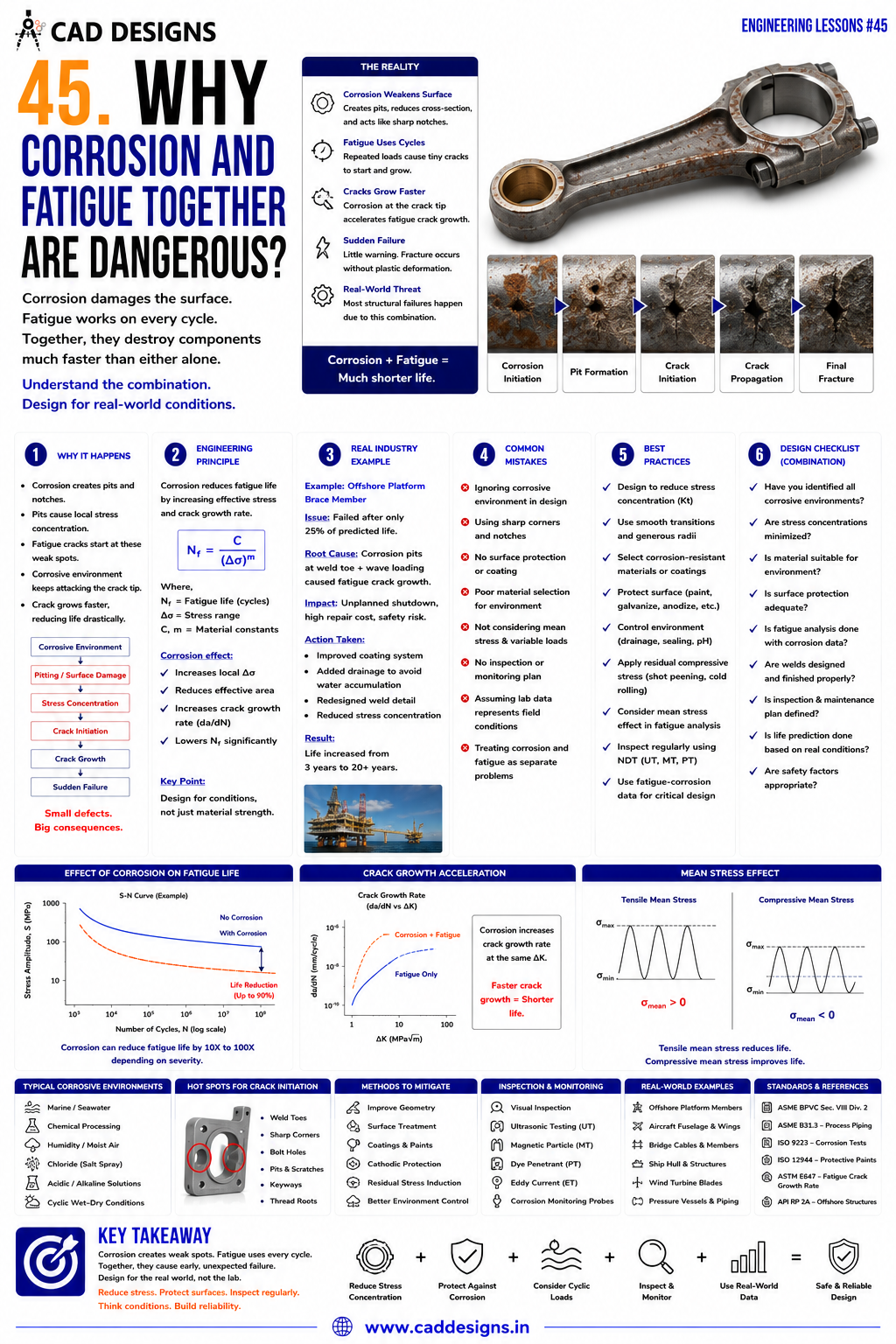
45. Why Corrosion and Fatigue Together Are Dangerous
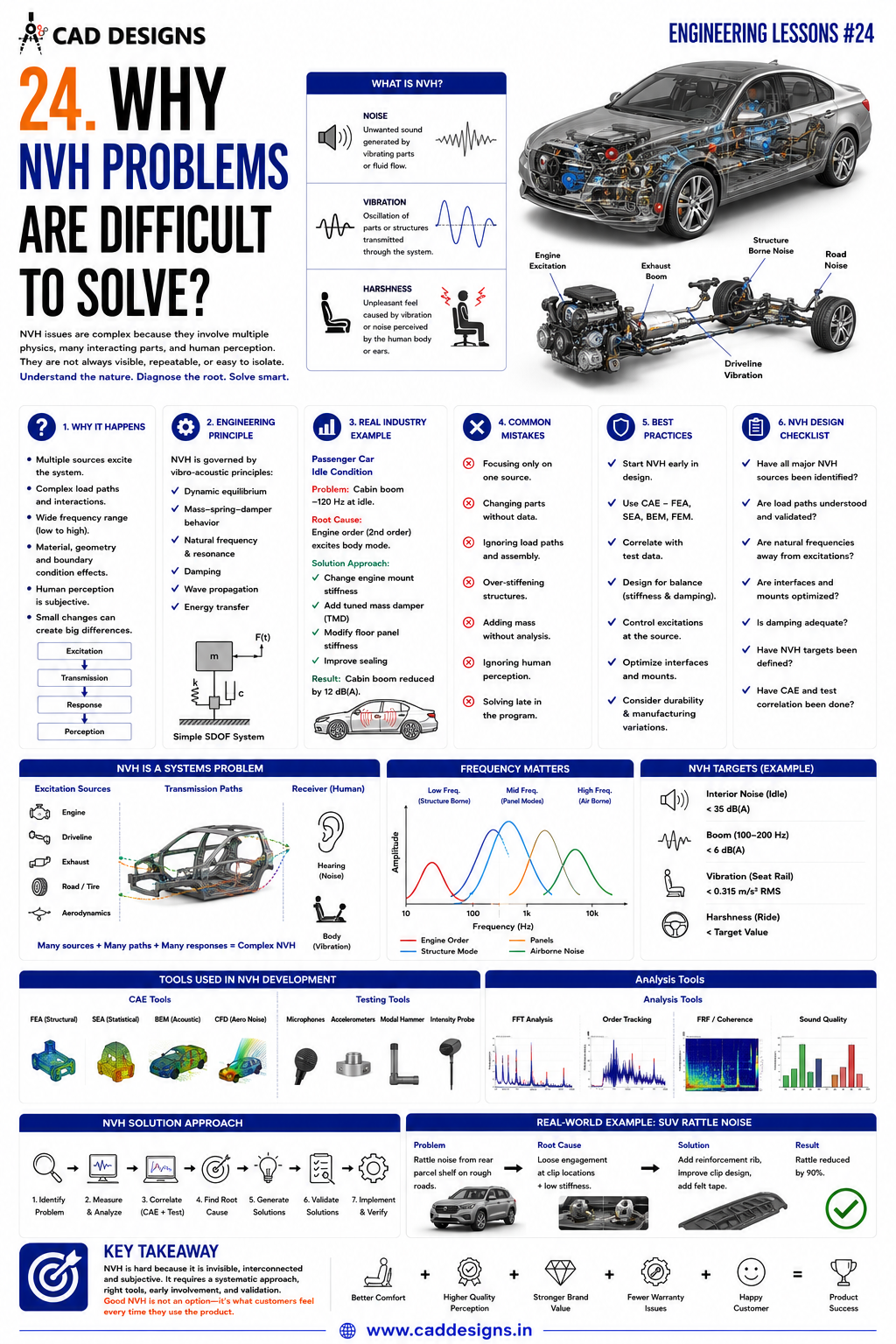
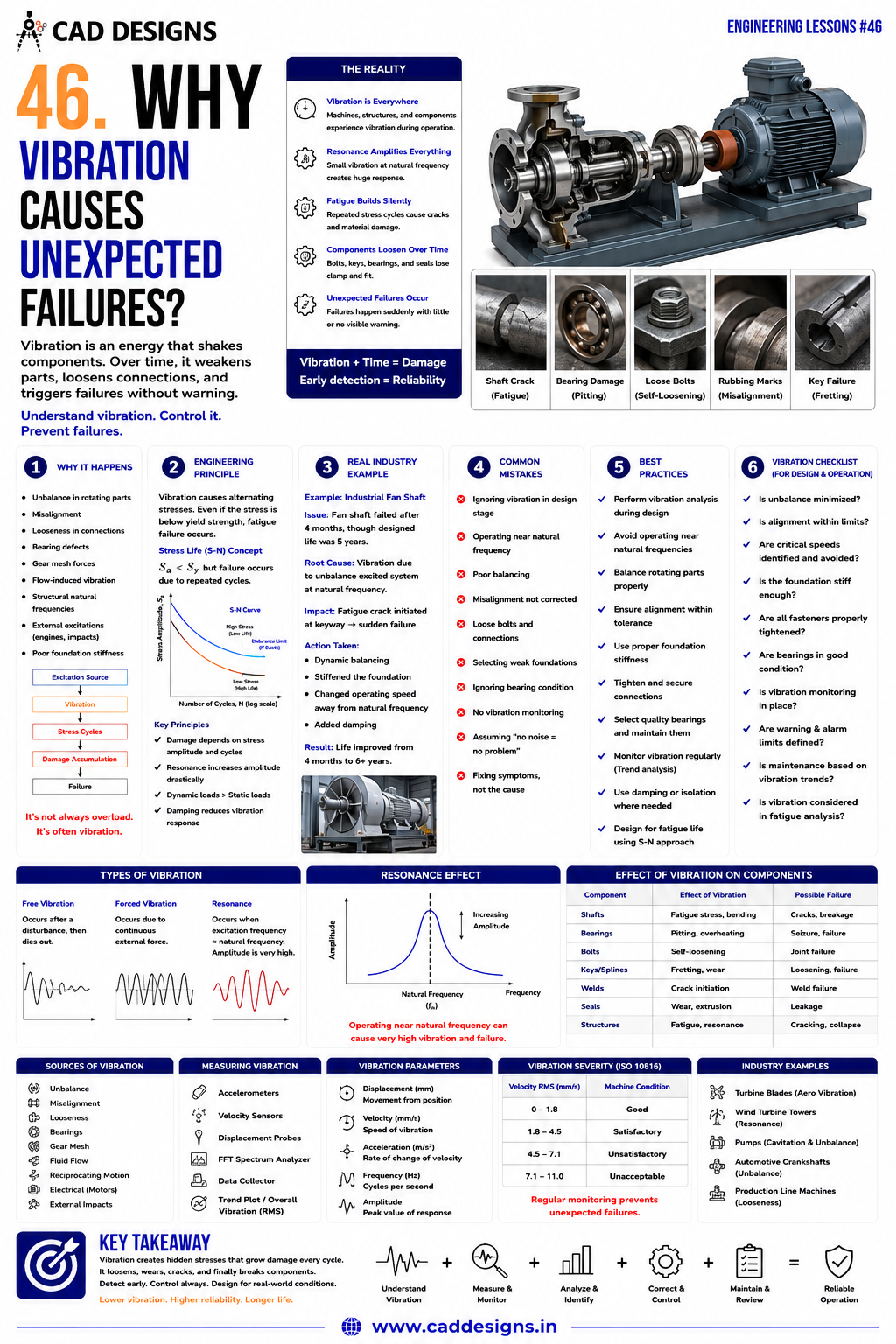
46. Why Vibration Causes Unexpected Failures
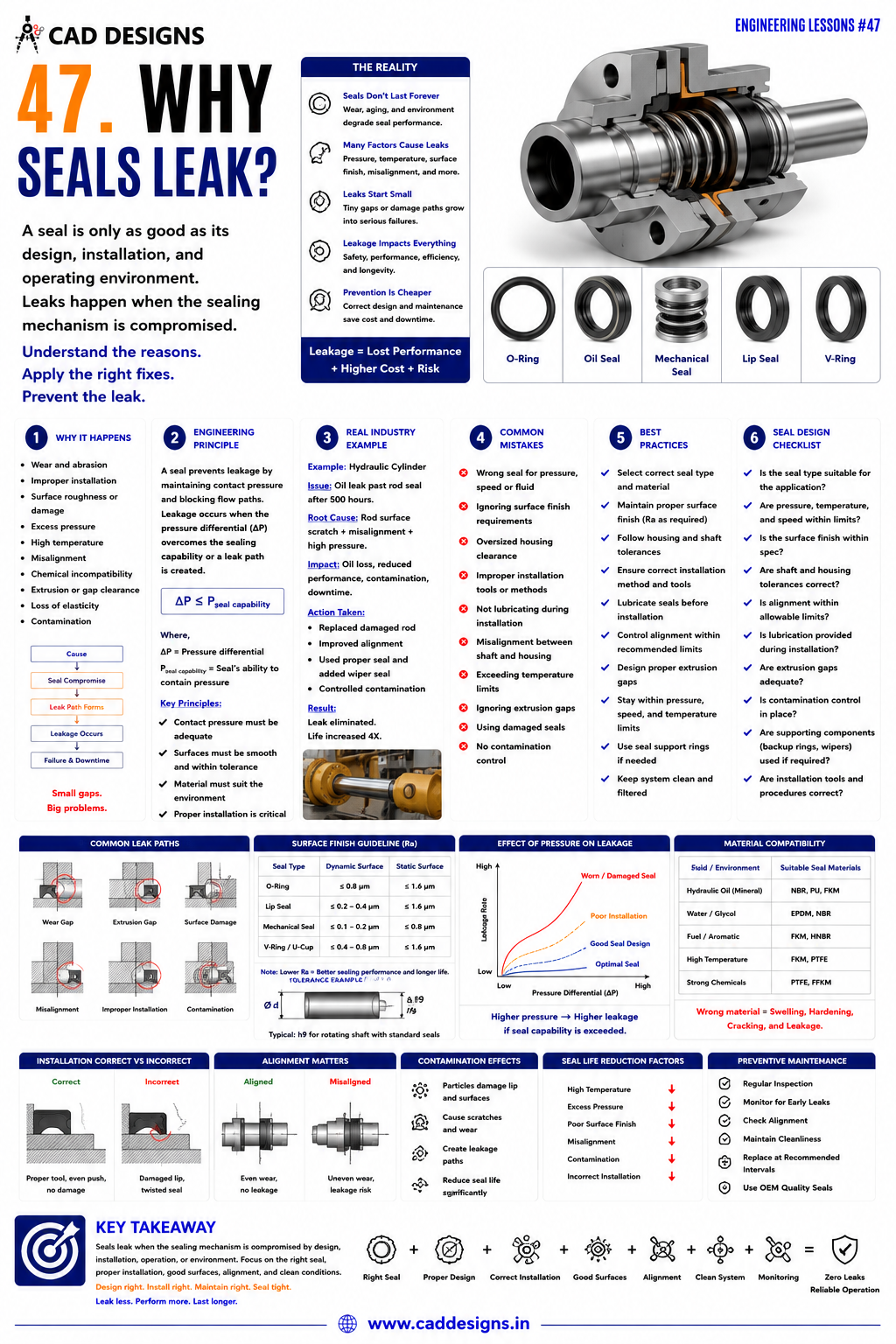
47. Why Seals Leak
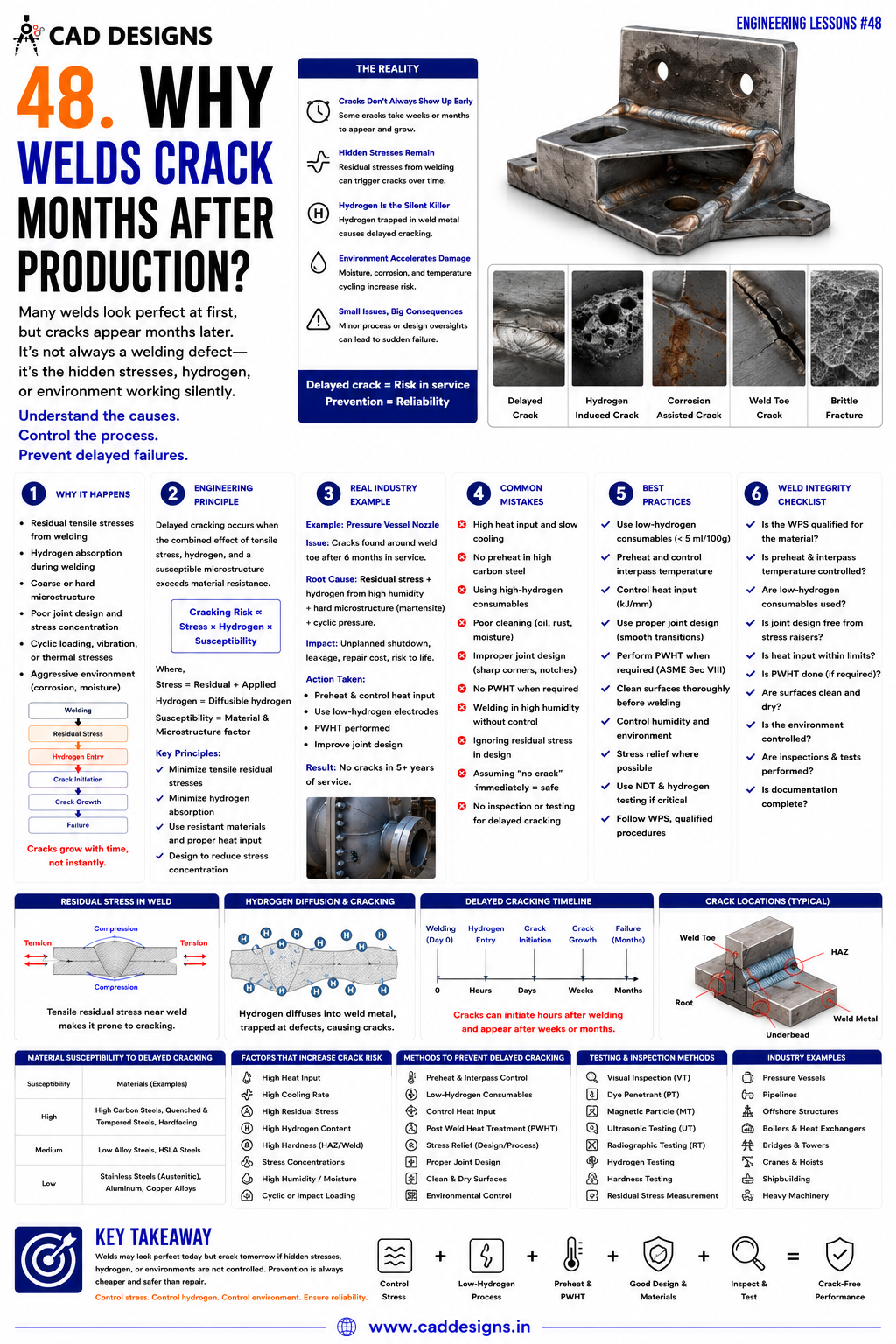
48. Why Welds Crack Months After Production
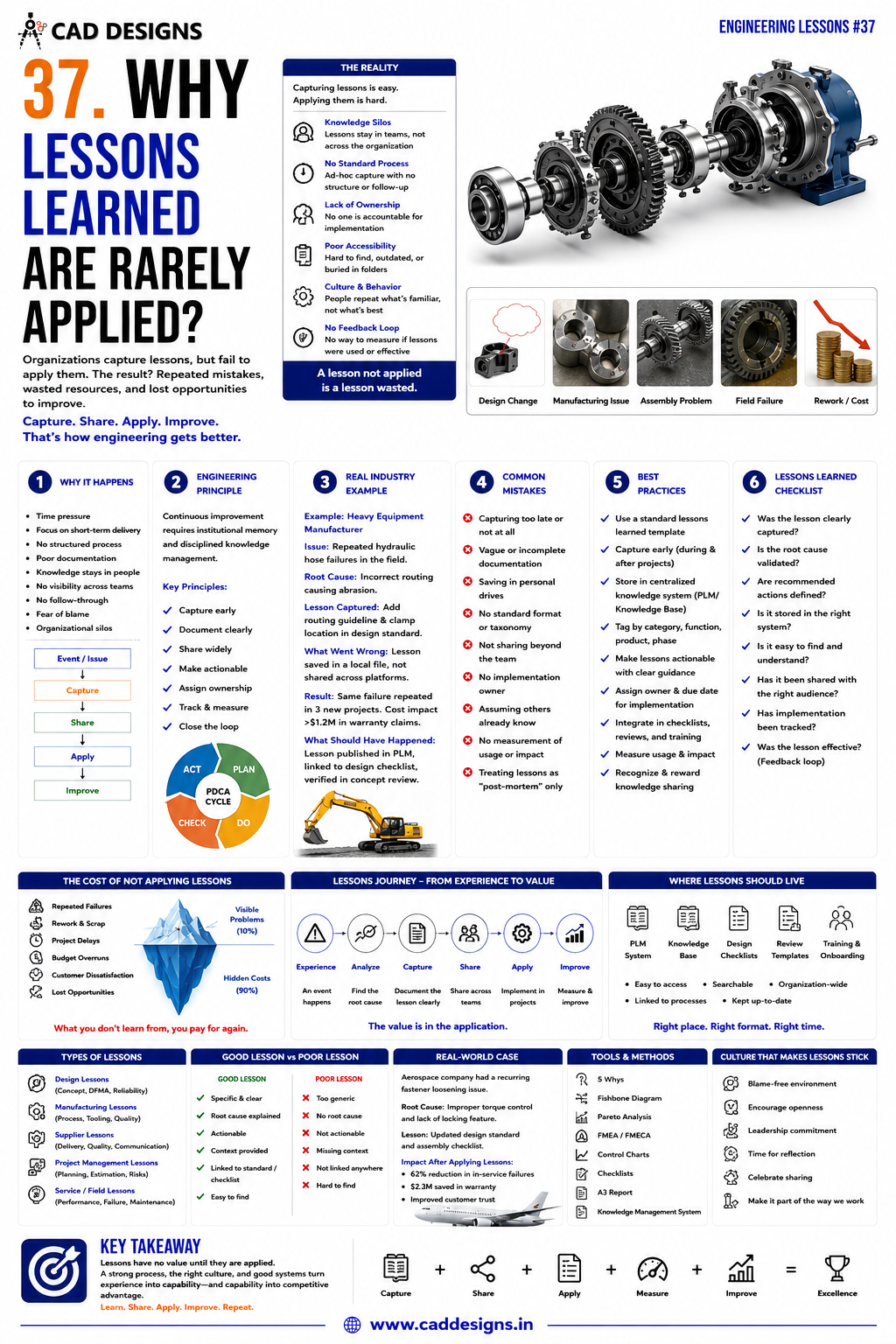
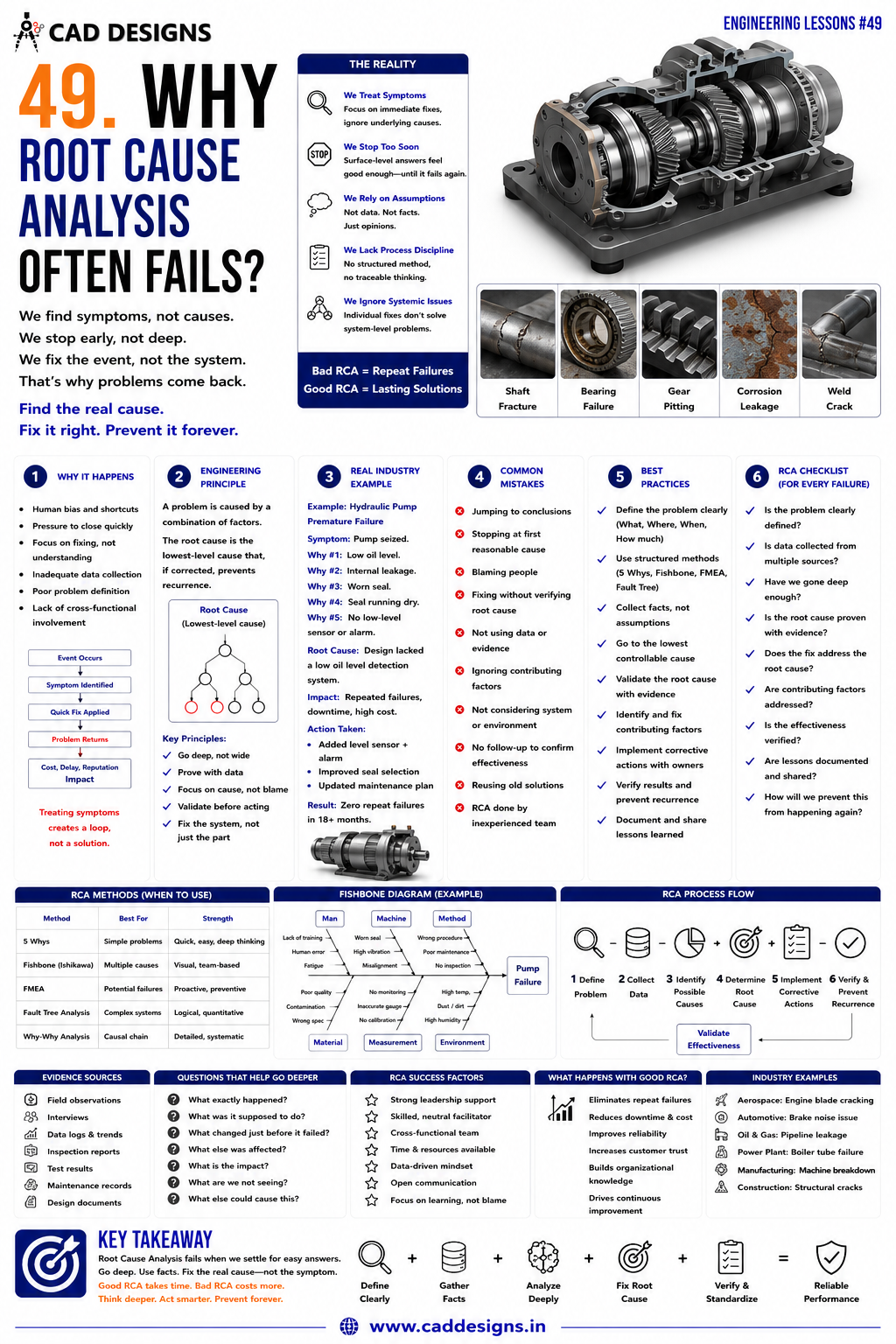
49. Why Root Cause Analysis Often Fails
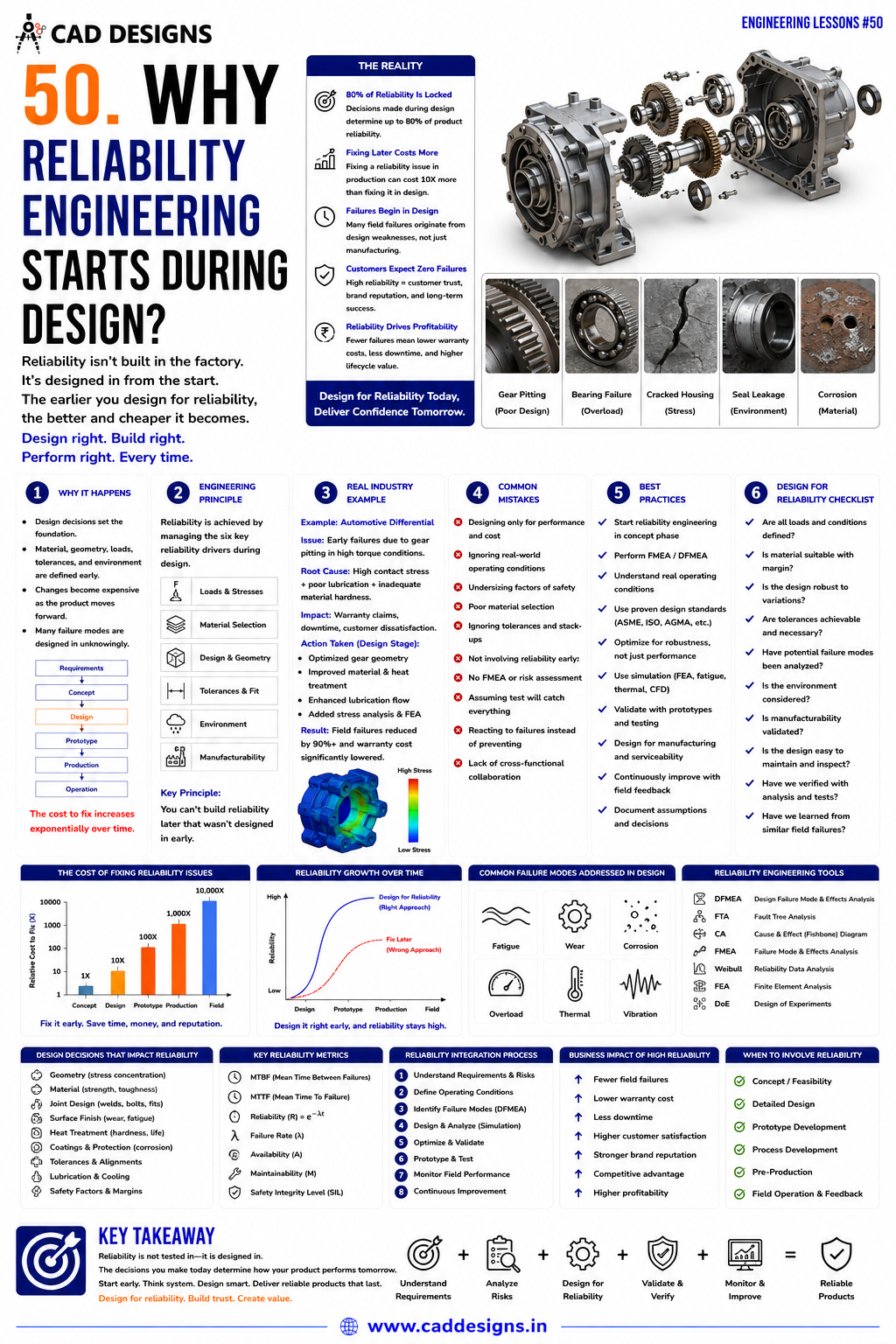
50. Why Reliability Engineering Starts During Design
Senior Engineer Mindset Lessons
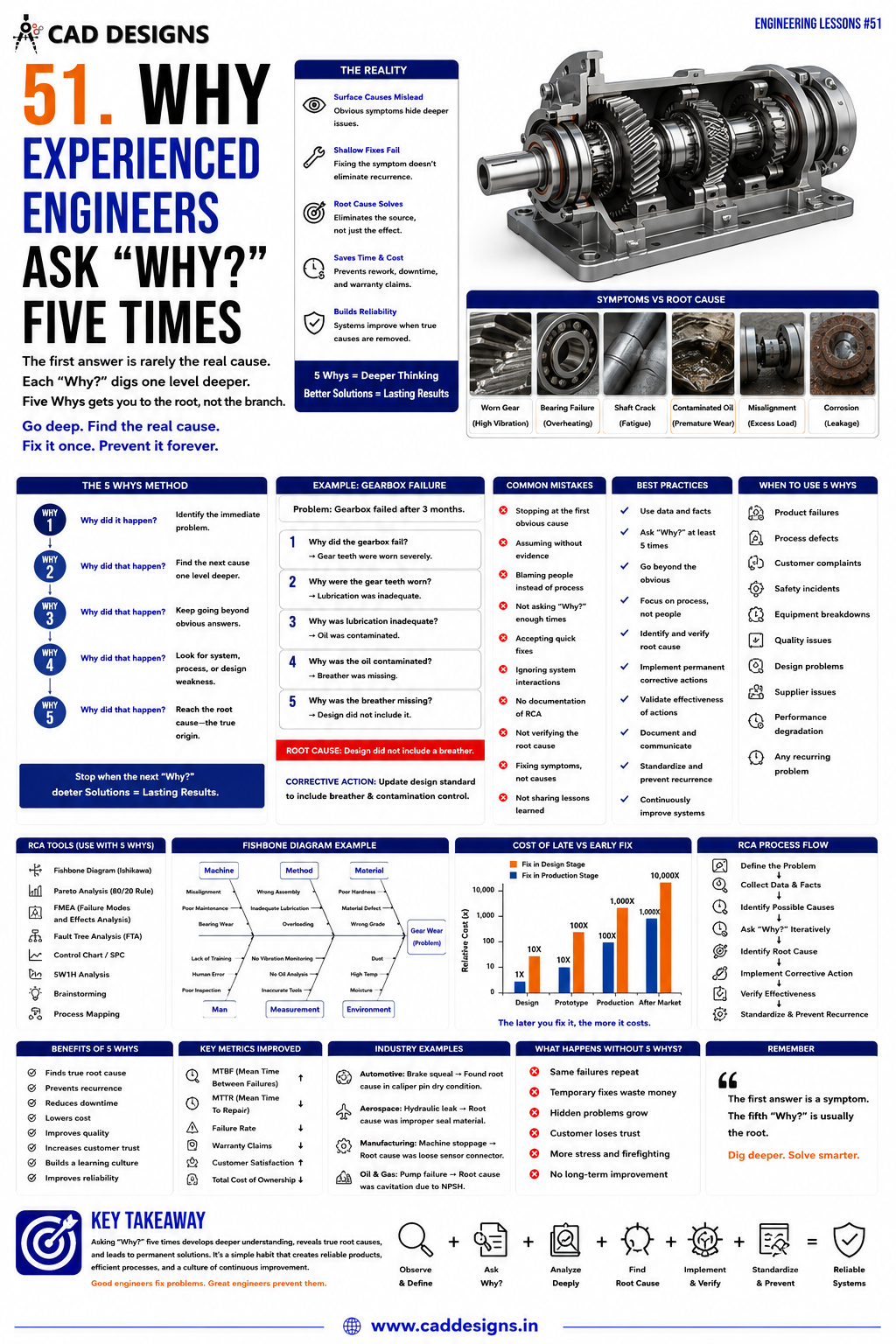
51. Why Experienced Engineers Ask “Why?” Five Times
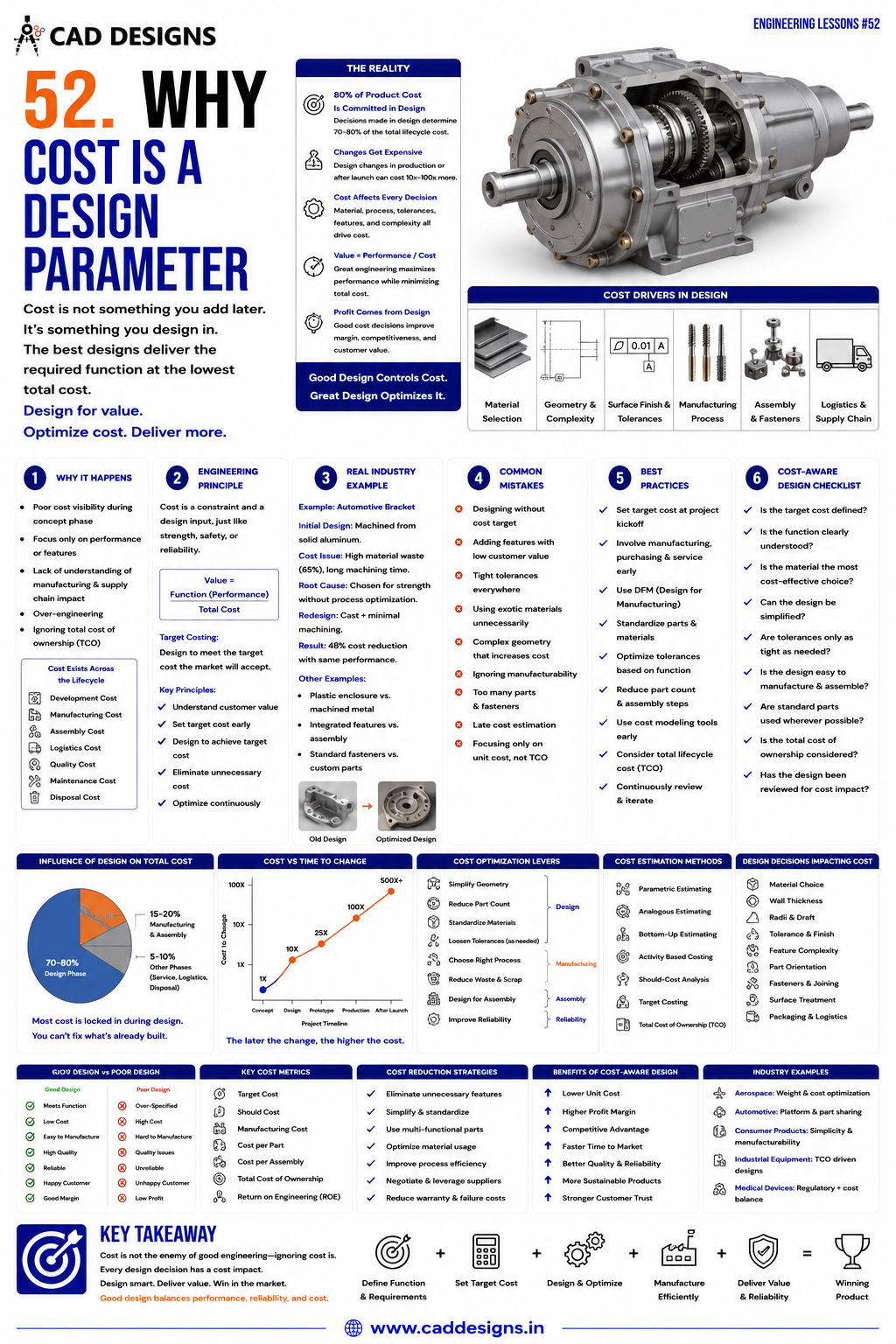
52. Why Cost Is a Design Parameter
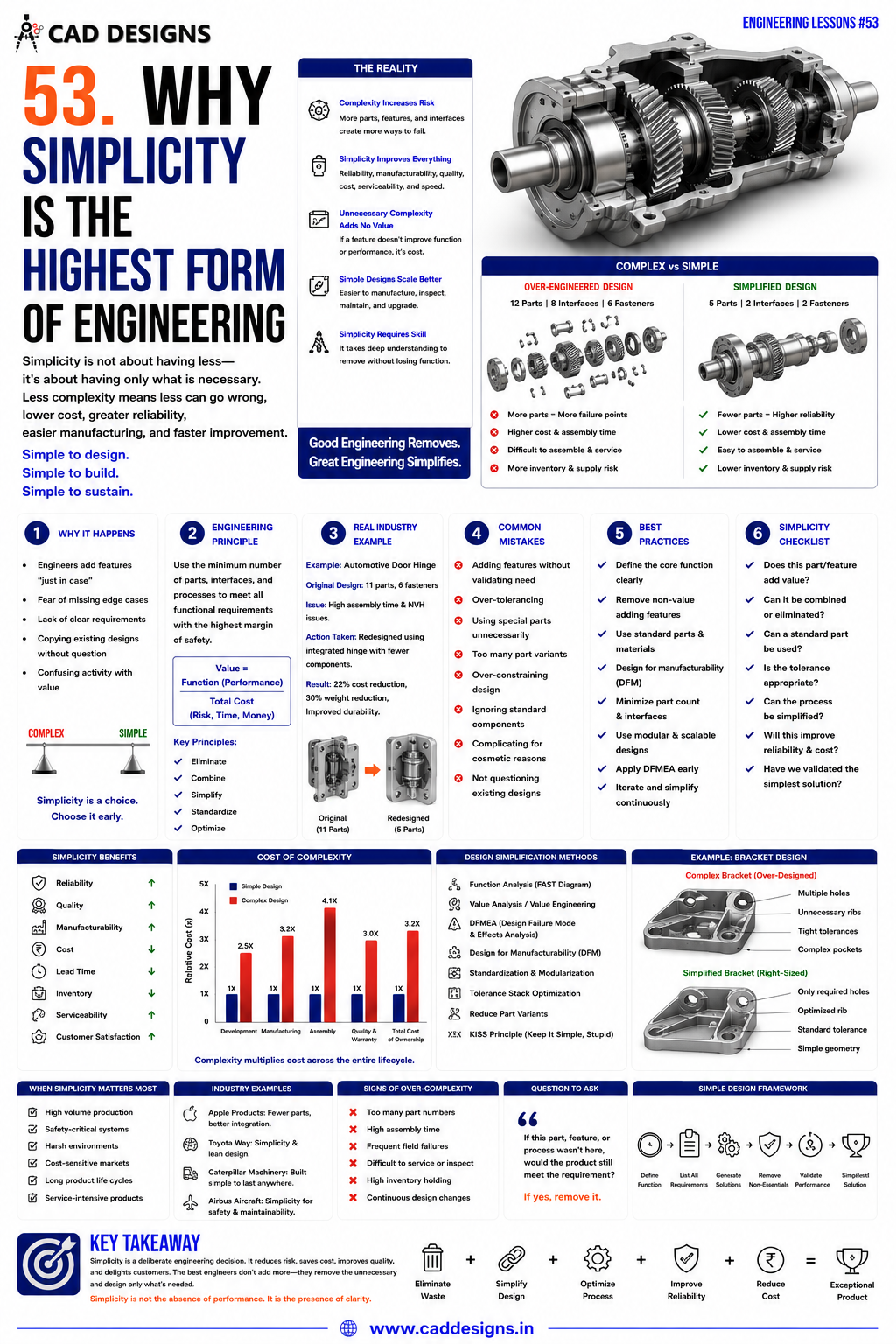
53. Why Simplicity Is the Highest Form of Engineering
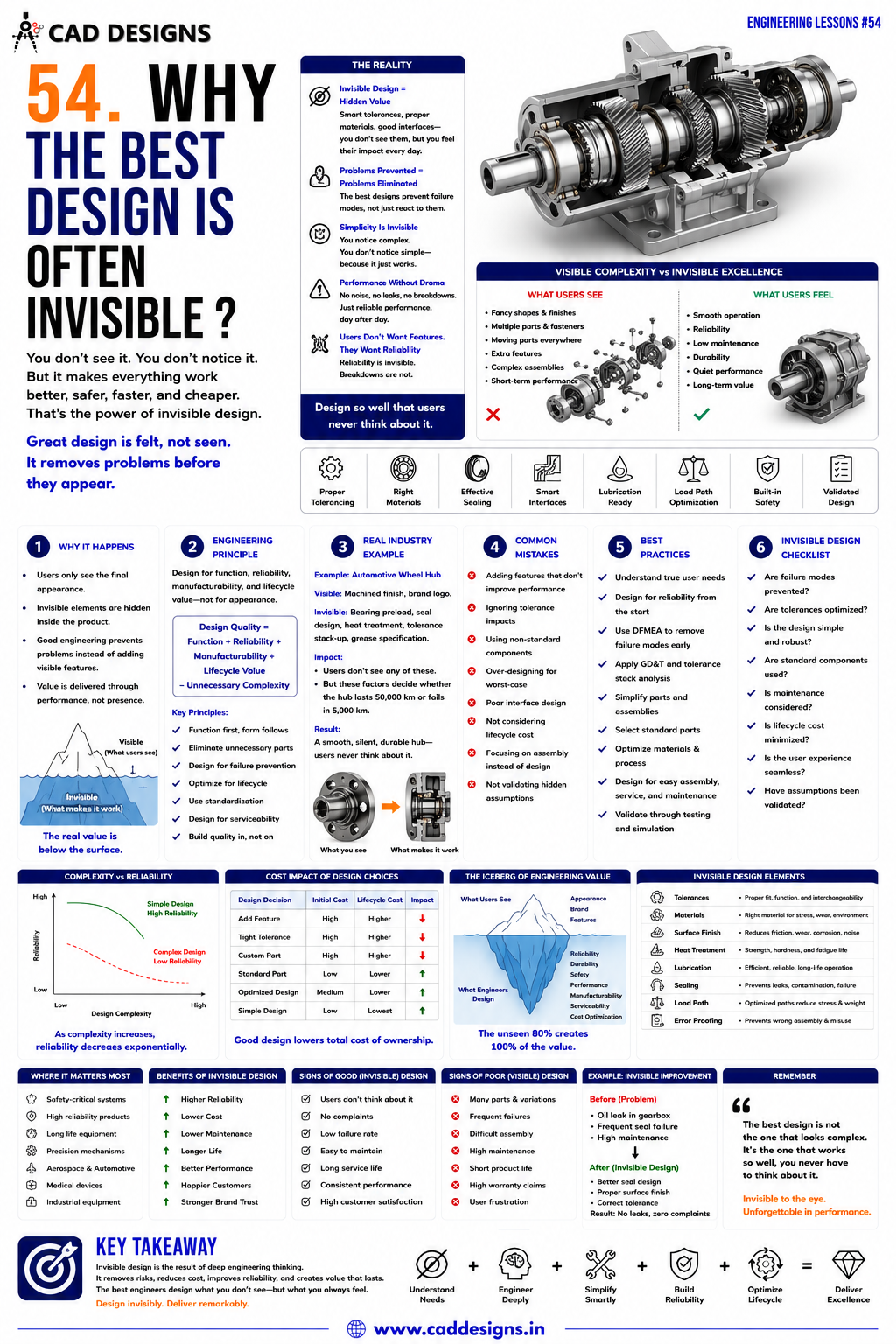
54. Why The Best Design Is Often Invisible
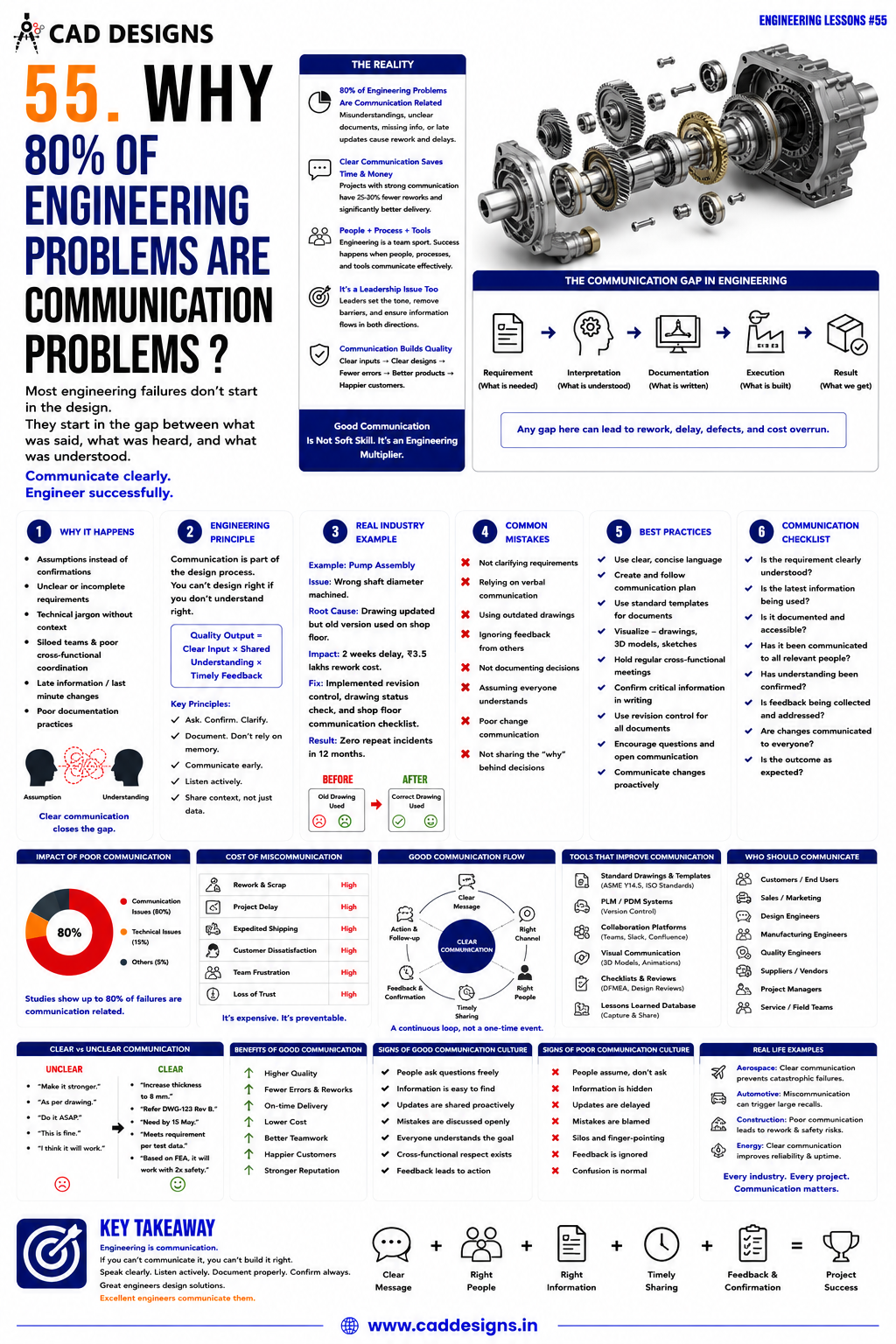
55. Why 80% of Engineering Problems Are Communication Problems
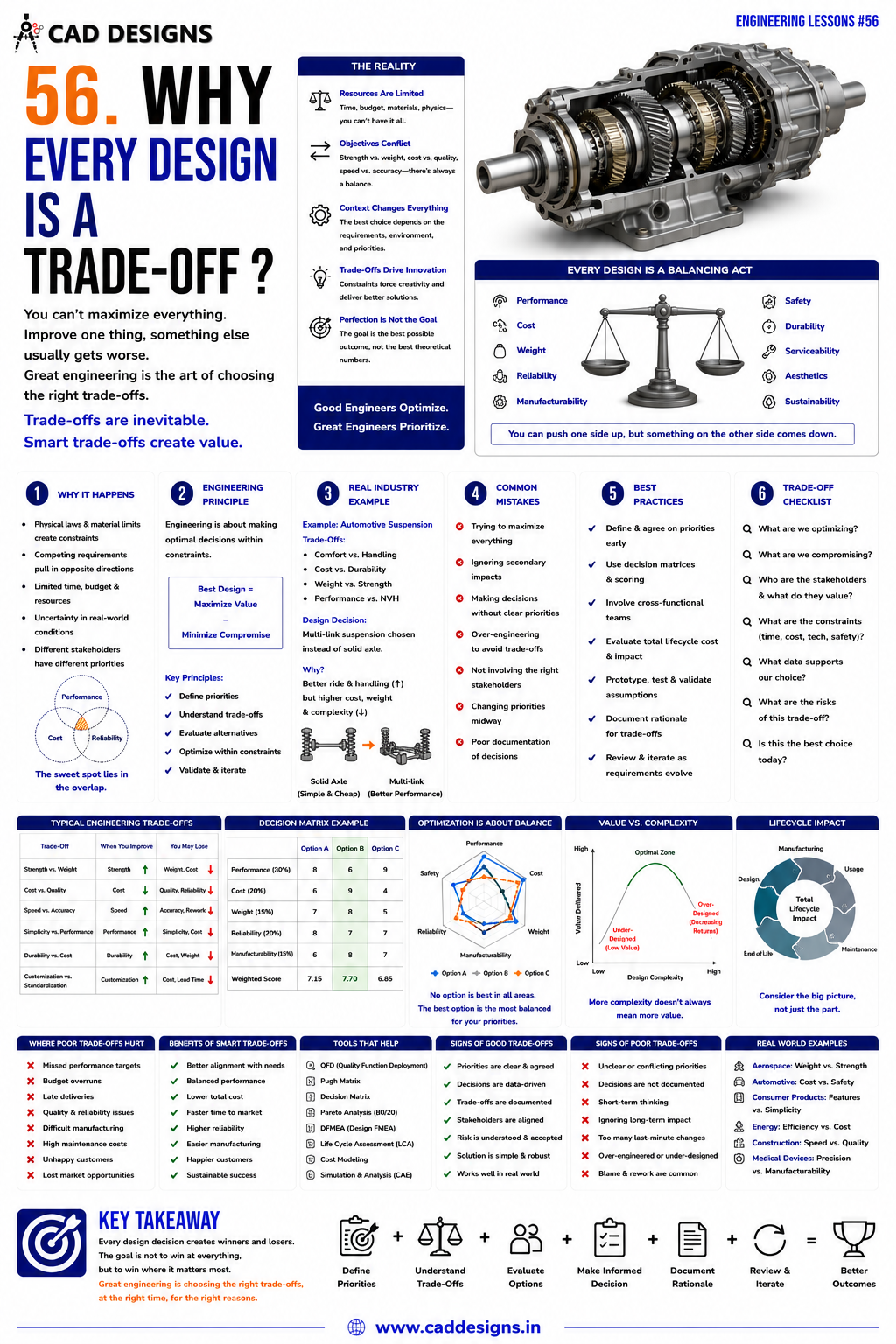
56. Why Every Design Is a Trade-Off
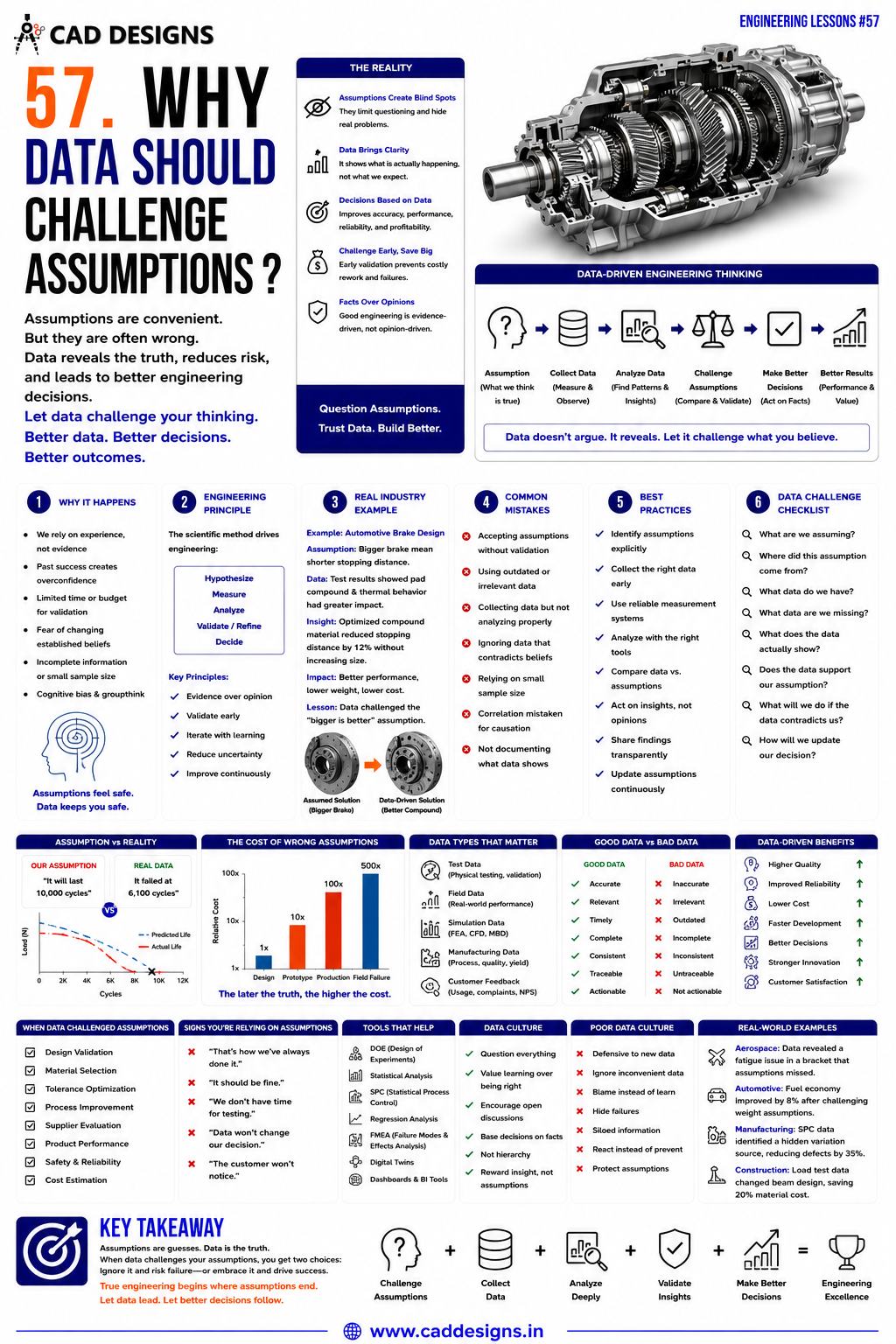
57. Why Data Should Challenge Assumptions
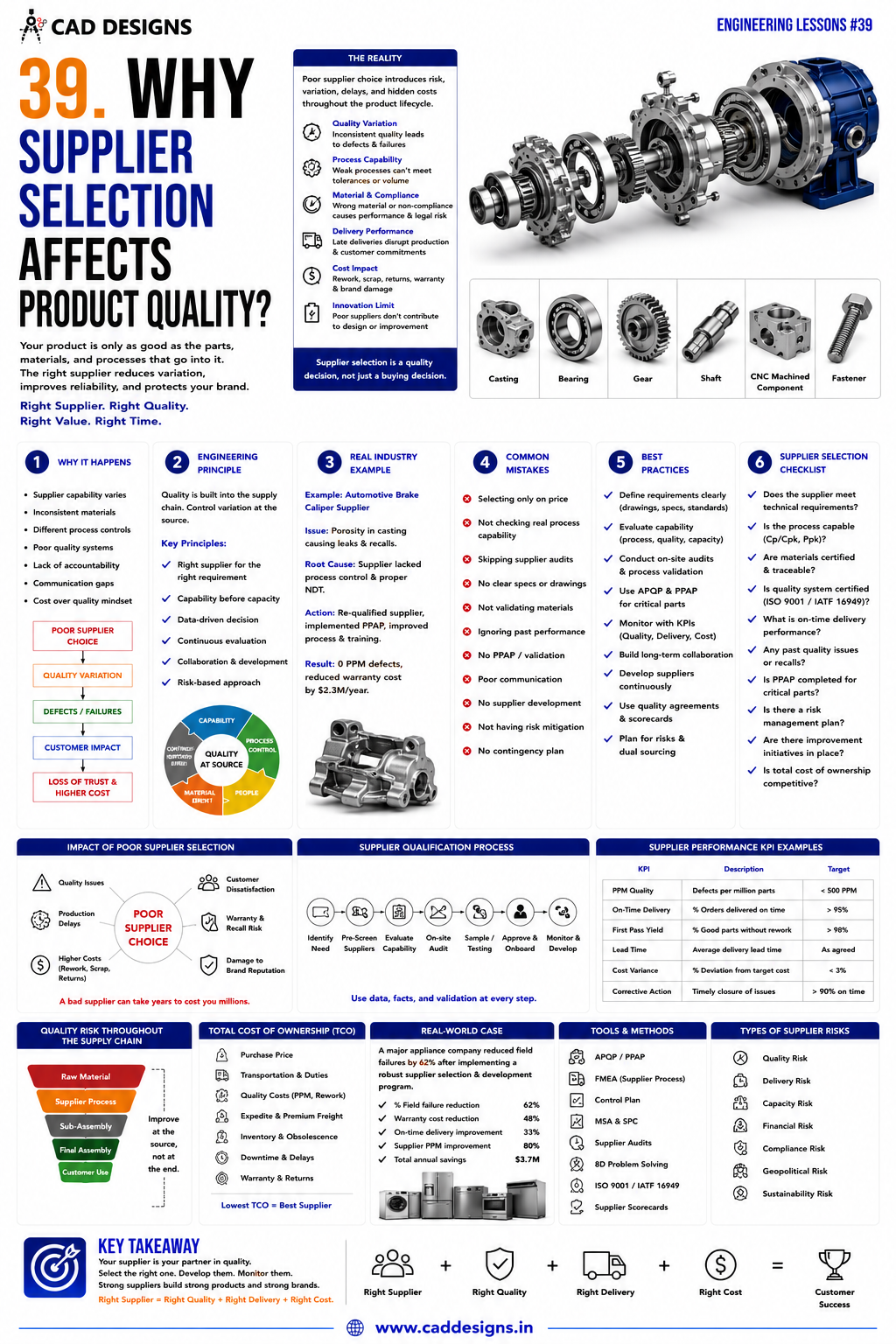
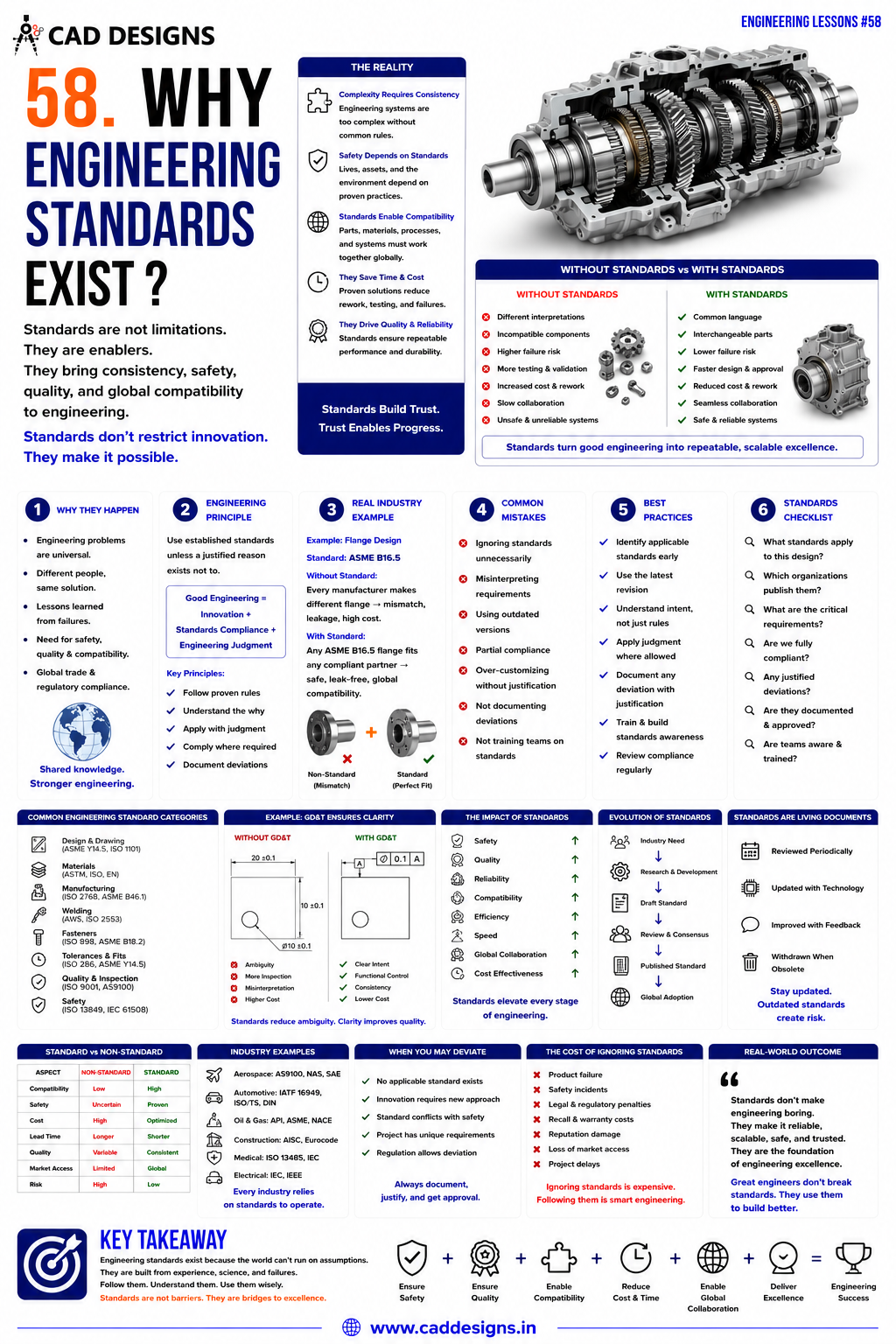
58. Why Engineering Standards Exist
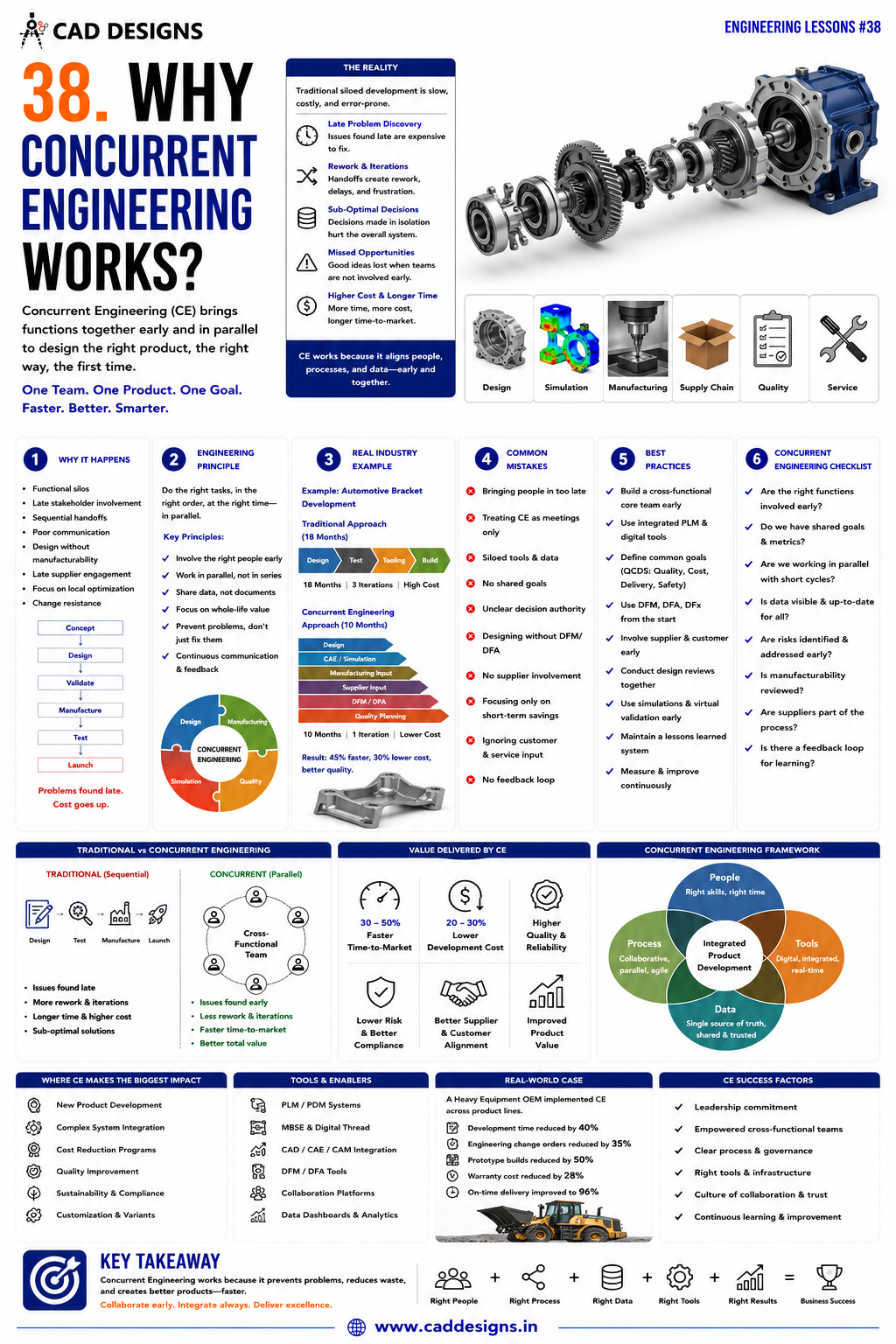
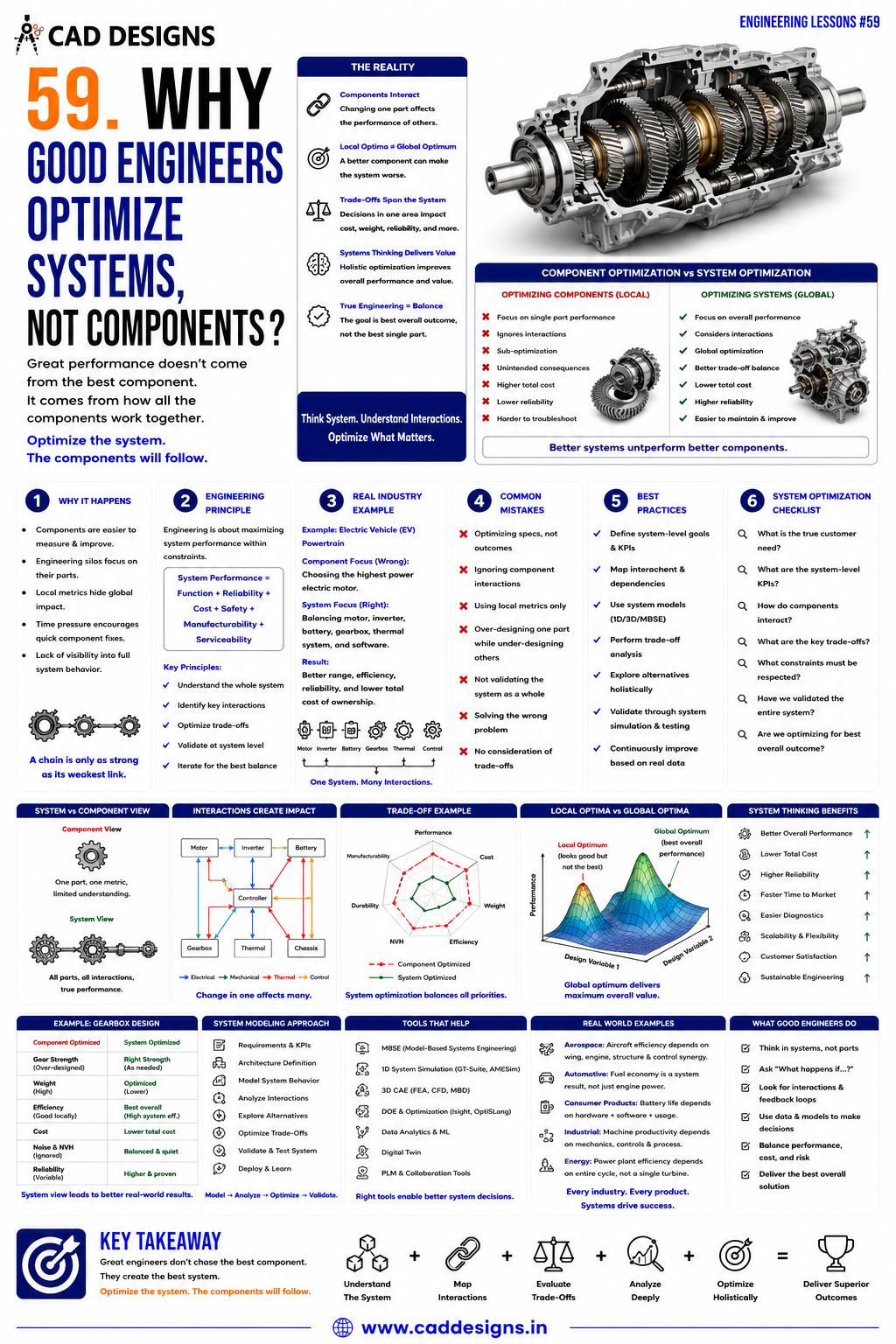
59. Why Good Engineers Optimize Systems, Not Components
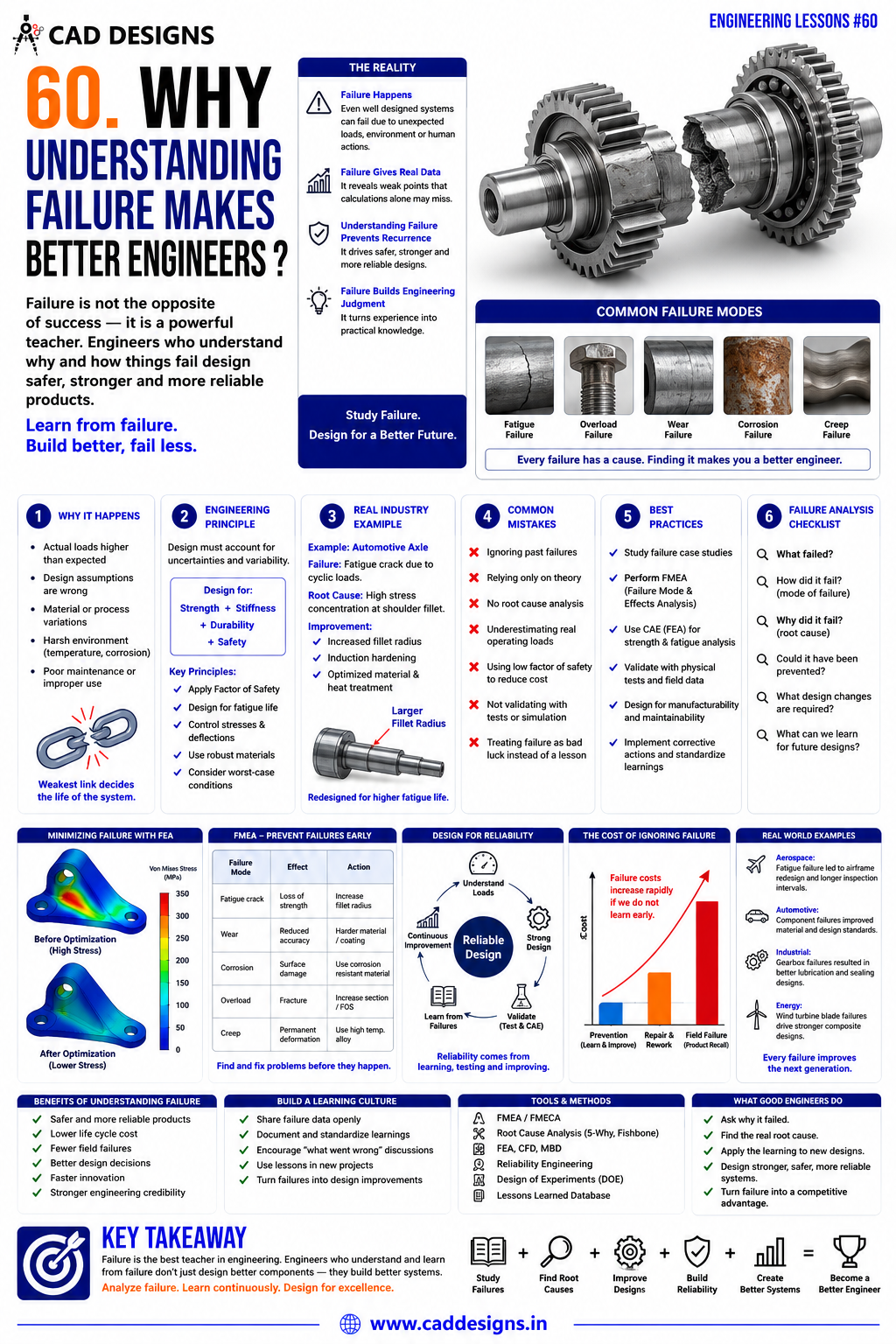
60. Why Understanding Failure Makes Better Engineers
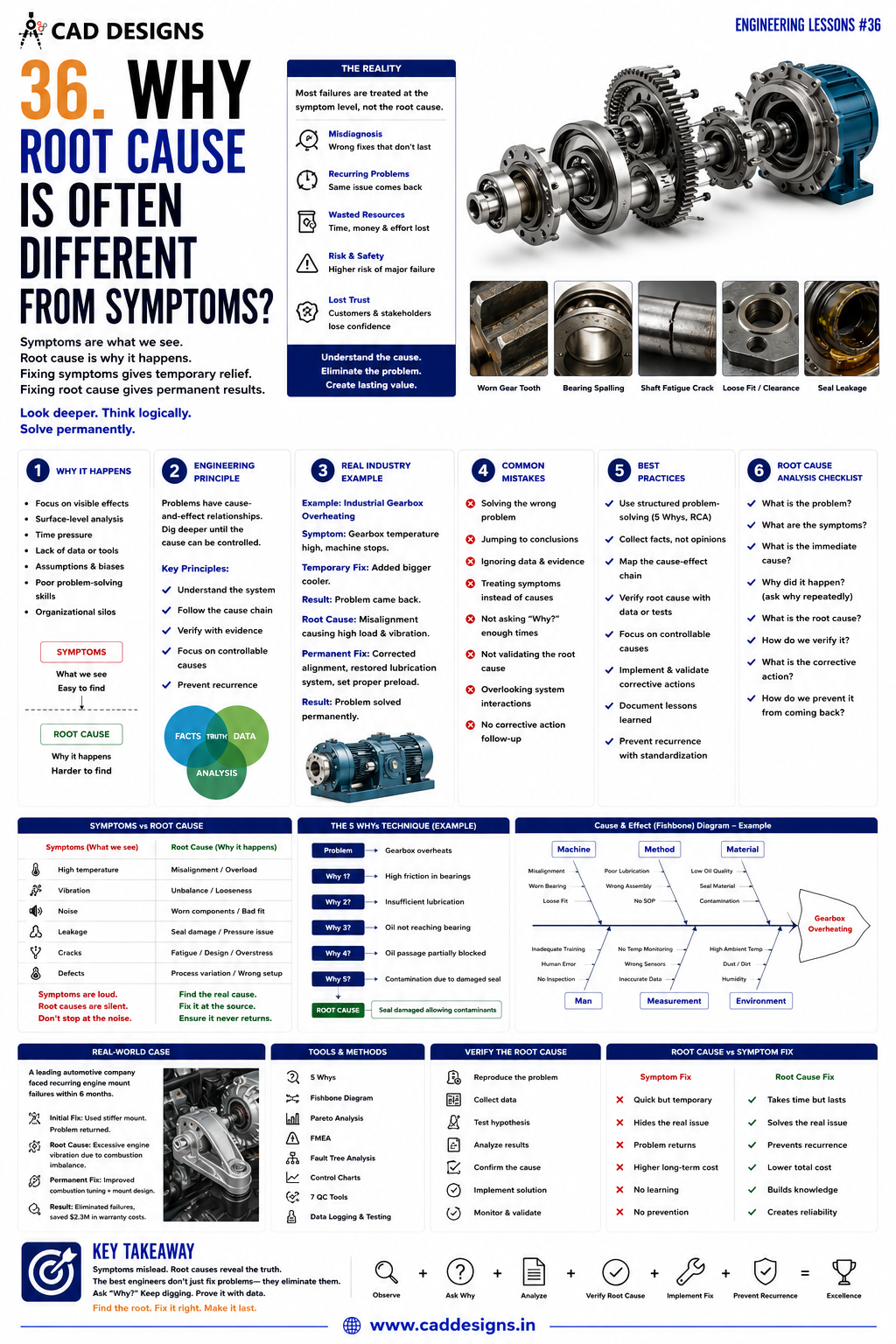
51. Why Experienced Engineers Ask “Why” Five Times
52. Why Cost Is a Design Parameter
53. Why Simplicity Is the Highest Form of Engineering
54. Why The Best Design Is Often Invisible
55. Why 80% of Engineering Problems Are Communication Problems
56. Why Every Design Is a Trade-Off
57. Why Data Should Challenge Assumptions
58. Why Engineering Standards Exist
59. Why Good Engineers Optimize Systems, Not Components
60. Why Understanding Failure Makes Better Engineers
Final Thoughts
The difference between a junior engineer and a senior engineer is not the number of formulas they remember. It is their ability to understand trade-offs, anticipate failures, optimize systems, and make informed engineering decisions.
This Engineering Lessons Series is designed to share practical knowledge gained from real-world engineering projects, manufacturing challenges, product failures, and design experiences.
Follow this series as we explore one lesson at a time and uncover the engineering principles that every experienced professional should know.
CAD Designs Engineering Knowledge for Design, Manufacturing, Automotive, and Product Development Professionals